1


Unexplored! — A Reader’s Guide
(0 User reviews)
1498
Project Gutenberg
2010
Not confirmed
Adventure stories; Camping -- Juvenile fiction; Forest fires -- Juvenile fiction; Sierra Nevada (Calif. and Nev.) -- Juvenile fiction; Geology -- Juvenile fiction
Readers of public-domain and historical texts
Project Gutenberg digital edition
en
Edition facts
Words
54,416
Reading time
237 min
Text sections
14
The catalog record for Unexplored! — A Reader’s Guide provides practical reading context through 54,416 words, 3 hr 57 min estimated reading time, and 14 detected text sections.
The text analysis averages about 18.6 words per sentence, while the detected sections provide another way to judge how the source is divided.
Project Gutenberg metadata also associates the work with “Adventure stories,” connecting these edition facts with the source record’s subject description.
Source:
Project Gutenberg record #33725
An editorial note examining Allen Chaffee's diction, dialogue, and descriptive choices in this 1922 Sierra Nevada adventure, where three boys, a geologist, and a prospector encounter bears, forest fires, and a limestone cave. Observations focus on the author's use of cowboy vernacular, geological terminology, and sensory details in cave and rodeo scenes.
Editorial Edition Score
4.8/5
★★★★★
★★★★★
Calculated from edition completeness, EPUB availability, text structure and catalogue metadata. Not a user rating.
How this score is calculated
- Description quality20 pts
- Title & short description10 pts
- Source metadata20 pts
- Text length15 pts
- Chapters / structure15 pts
- EPUB file integrity20 pts
Total of 100 points, scaled to a 2.5-5.0 range. Editions with an empty description or a missing EPUB file are not scored.
Edition quality
Public-domain source text
Read the source text
The source text is kept in the dedicated reader, separate from this catalogue record and its commentary.
Allen Chaffee opens Unexplored! with a rodeo scene that immediately establishes a specific California vernacular. Ted Smith, flinging his legs off a frisky bay, drawls “Sure AM!” and Ace King wears “new leather chaps—a contrast to Ted’s overalls.” The dialogue is clipped and colloquial, with phrases like “Betcher life, Old Kid!” and playful insults such as “you poor fish!—You ichthyosaurus.” Chaffee’s descriptive eye lingers on the crowd’s clothing: “an Indian in a purple shirt was borrowing the orange chaps of another broncho-buster,” and cowmen offset their “two-quart” sombreros with “brilliant-hued bandannas.” These details ground the story in a particular time and place, the Sierra Nevada foothills of the early 1920s.
Cowboy Vernacular and Character Voice
Chaffee differentiates her characters through speech patterns. Ted’s drawl and Ace’s teasing tone contrast with the more formal Ranger Radcliffe. When Ace calls Ted an “ichthyosaurus,” the joke relies on geological knowledge, blending the boys’ banter with the story’s scientific thread. The author also uses period-specific slang: “Thunder!” and “I tell you I’m no professor.” These choices create a natural, unforced dialogue that feels authentic to the setting. The narrator occasionally adopts a similar register, as when describing Ace’s fall into a “ten foot well” where he lands “on all fours, in Stygian blackness.” The word “Stygian” is a literary touch that elevates the prose without breaking the adventurous tone.
Geological Description as Adventure
Chaffee weaves geological terms into the narrative without pausing for explicit lessons. In the cave, Ace identifies “gypsum” formations and “needle gypsum, that hung as fine as fur.” The boys stuff their pockets with “jewel-like bits” of crystal, and the cavern is compared to “a Gothic cathedral, with a dome whose highest point must have been several hundred feet above.” These descriptions are sensory: alabaster stalactites “shining like icicles or mosses, some white as snow, some yellow as gold, and some so like maple sugar in appearance that Ace actually tasted it.” The author trusts readers to absorb terms like “Cambrian era” and “fossils of the fish age” through context and character dialogue.
Sensory Details in Action and Setting
Chaffee’s prose is rich with tactile and visual specifics. The cave floor is “slippery,” candles are “thrust in their hat bands,” and the air is “all aflutter with the bats they had startled from their pendant slumbers.” In the rodeo scene, “the slanting rays of California sunshine were fanned by a breeze from Huntington Lake.” The author also notes the “prevailing khaki of the dusty onlookers” punctuated by “a splash of color.” These details build a vivid, immersive world. The action sequences are similarly concrete: when the floor gives way, “Ted came, plunk! almost on top of him,” and the boys’ candles are “flicked out.” The use of onomatopoeia and precise verbs keeps the pace brisk.
Structure and Pacing of the Excerpts
The excerpts reveal a narrative that alternates between open-air adventure and underground exploration. The rodeo chapter establishes the characters and setting, while later passages shift to the cave, where the boys search for missing Mexicans. Chaffee uses a ball of twine to track movement through the cavern, a practical detail that also builds tension. The pacing is deliberate: descriptive passages of the cave’s beauty are followed by sudden action, like the floor collapse. The author also includes moments of humor, such as Ace tasting the stalactite, to lighten the mood. These structural choices keep the reader engaged while conveying information about geology and survival.
Readers should attend to how Chaffee balances education with entertainment. The glossary of geological terms at the end of the book suggests she intended the story to teach as well as thrill. The excerpts show a writer confident in her audience’s ability to absorb specialized vocabulary through context. The dialogue-driven characterization and precise sensory details make this a work that rewards close reading for its craft, not just its plot.
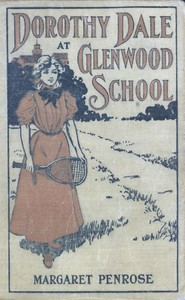
Sitting with Chaffee's boys, I kept noticing how carefully their rough talk was staged for young readers, every detail deliberate. It reminded me of another world, older and gentler, where a girl's voice carried the same quiet intention. That sort of careful construction lingers. I thought of Dorothy Dale at Glenwood School — Inside the Classic and its own tender orchestration.
There are no reviews for this eBook.
There are no comments for this eBook.
Reader reflection
Take a moment to reflect on this book
Create a short personal record of your experience with this book.
Your progress
0
/
10
2
How did the book work for you overall?
3
Would you recommend this book to another reader?
4
Did the language feel accessible?
5
Would you read this book again?
6
Did the book offer a fresh perspective?
7
How useful did the reading feel?
8
How closely did the book connect with your experience?
9
Which lesson or insight stayed with you?
10