1

Among the Red-skins; Or, Over the Rocky Mountains — Inside the Classic
(0 User reviews)
1126
Project Gutenberg
2010
Not confirmed
Orphans -- Juvenile fiction; Indians of North America -- Juvenile fiction; Adventure and adventurers -- Juvenile fiction; Natural history -- Juvenile fiction; Uncles -- Juvenile fiction; Outdoor life -- Juvenile fiction; Massacres -- Juvenile fiction; Animals -- Canada -- Juvenile fiction; Blackfeet Band of Dakota or Sioux Indians -- Juvenile fiction; Columbia Mountains (B.C.) -- Juvenile fiction
Readers of public-domain and historical texts
Project Gutenberg digital edition
en
Edition facts
Words
32,403
Reading time
141 min
Text sections
4
Among the Red-skins; Or, Over the Rocky Mountains — Inside the Classic can be approached with a clearer sense of reading commitment from its source measurements: 32,403 words, 2 hr 21 min estimated reading time, and 4 detected text sections.
The text analysis averages about 22.6 words per sentence, while the detected sections provide another way to judge how the source is divided.
Project Gutenberg metadata also associates the work with “Orphans -- Juvenile fiction,” connecting these edition facts with the source record’s subject description.
Source:
Project Gutenberg record #34486
An editorial note examining how W.H.G. Kingston's 19th-century adventure novel uses frontier survival, orphan protagonists, and Indigenous encounters, contrasting catalog subjects with the text's actual emphasis on landscape and labor.
Editorial Edition Score
4.6/5
★★★★★
★★★★★
Calculated from edition completeness, EPUB availability, text structure and catalogue metadata. Not a user rating.
How this score is calculated
- Description quality20 pts
- Title & short description10 pts
- Source metadata20 pts
- Text length15 pts
- Chapters / structure15 pts
- EPUB file integrity20 pts
Total of 100 points, scaled to a 2.5-5.0 range. Editions with an empty description or a missing EPUB file are not scored.
Edition quality
Public-domain source text
Read the source text
The source text is kept in the dedicated reader, separate from this catalogue record and its commentary.
W.H.G. Kingston’s Among the Red-skins; Or, Over the Rocky Mountains opens not with a raid or a council fire but with a domestic scene: Uncle Donald returns from hunting, unstraps a load of caribou meat, and calls for supper. The missing boy Hugh sets the plot in motion, but the early pages dwell on the rhythms of frontier housekeeping—milk pails, a hurried meal, the hanging of rifles. The catalog lists “Indians of North America” and “massacres” as subjects, yet the excerpts show far more attention to snow-shoes, river crossings, and the precise weight of a pack. This note examines what the text actually foregrounds versus what its metadata promises.
Landscape Over Conflict
The catalog subjects include “Massacres -- Juvenile fiction” and “Blackfeet Band of Dakota or Sioux Indians,” but the excerpts devote little space to violent encounters. Instead, the narrative lingers on physical geography: the river “confined between perpendicular walls of rock,” the need to “form another path” over “ledges of rock, banks of ice and snow,” and the careful construction of bridges “from one huge boulder to another.” The party’s chief antagonist is the terrain, not a human foe. When Corney falls through ice, the rescue is a logistical problem solved with poles and rope, not a skirmish. The word “massacre” does not appear in the provided text; the closest threat is the “dark water boiling at our feet ready to engulf any one who might make a false step.”
Orphans and Their Keepers
The catalog lists “Orphans -- Juvenile fiction” and “Uncles -- Juvenile fiction,” and the excerpts confirm this: the narrator Archie and his cousin Hugh live under Uncle Donald’s roof. Yet the uncle is not a stern guardian but a figure of “placid and benignant expression,” with “long silvery beard” and Highland bonnet. The household includes Rose, a “fair-haired, blue-eyed little maiden,” and Madge, a “gaunt, dark-skinned Indian woman” whose speech is rendered in a clipped, translated style: “What he will he do.” The orphan status is mentioned in passing, not dramatized; the emotional weight falls on the group’s interdependence during travel. The text treats the mixed household as unremarkable, focusing on shared labor rather than sentimentalizing loss.
The Work of Travel
Kingston’s prose is most detailed when describing the mechanics of movement. Snow-shoes “sank in places nearly a foot deep”; the men “shovelled away the snow until we reached the moss on which we formed our beds”; they “made our fire in the centre of the hole.” The narrative repeatedly interrupts action to explain technique: how to cross a fall, how to rescue a man from a crevasse, how to judge ice thickness. The Irish character Corney provides comic relief (“Arrah! the spalpeens!”) but also practical commentary. The catalog subject “Outdoor life -- Juvenile fiction” fits, but the excerpts show that “outdoor life” here means relentless, methodical effort—not picturesque camping. The goat hunt fails because the hunters misjudge distance in clear air; the lesson is about perception, not heroism.
Readers expecting a conventional Indian-captivity or massacre narrative will find instead a story of endurance against cold, distance, and difficult terrain. Kingston’s interest lies in how people move through a hostile landscape—what they carry, how they build shelter, what they eat. The catalog subjects hint at drama the text does not deliver; the real adventure is in the daily work of survival. Approach this book as a period survival manual wrapped in a juvenile adventure frame, and its peculiar strengths become clear.
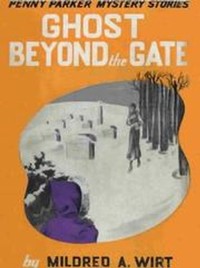
Reading about Kingston’s orphans toiling through the Rockies, I remembered long summer afternoons in my grandfather’s study, tracing maps in an old atlas. That same sense of immense, indifferent landscape—both beautiful and demanding—came back to me later in Ghost Beyond the Gate — Reading Notes. It wasn’t the adventure that lingered, but the quiet labor of simply getting through each day, one step at a time.
There are no reviews for this eBook.
There are no comments for this eBook.
Reader reflection
How will you remember this book?
Save your reaction, strongest insight, and memorable passage.
Your progress
0
/
10
2
How did the book work for you overall?
3
Would you encourage someone else to read it?
4
Did the language feel accessible?
5
Would you start a conversation about this book?
6
How original did the book feel?
7
What was its emotional impact?
8
How well did it match your expectations?
9
What changed or sharpened your thinking?
10