1

Ghost Beyond the Gate — Reading Notes
(0 User reviews)
2211
Project Gutenberg
2010
Not confirmed
Ghost stories; Adventure stories; Mystery and detective stories; Mystery fiction; Parker, Penny (Fictitious character) -- Juvenile fiction; Women detectives -- Juvenile fiction
Readers of public-domain and historical texts
Project Gutenberg digital edition
en
Edition facts
Words
44,623
Reading time
195 min
Text sections
7
Ghost Beyond the Gate — Reading Notes can be approached with a clearer sense of reading commitment from its source measurements: 44,623 words, 3 hr 15 min estimated reading time, and 7 detected text sections.
The text analysis averages about 9.9 words per sentence, while the detected sections provide another way to judge how the source is divided.
Project Gutenberg metadata also associates the work with “Ghost stories,” connecting these edition facts with the source record’s subject description.
Source:
Project Gutenberg record #34395
In this 1943 Penny Parker mystery, the catalog subjects of ghost stories and detective fiction converge unevenly: the excerpts show a plucky girl detective pursuing a woman in black through snow and ice, while the titular ghost remains a rumor. The opening iceboat crash and the cemetery stakeout reveal a story more grounded in physical action than supernatural atmosphere.
Editorial Edition Score
4.7/5
★★★★★
★★★★★
Calculated from edition completeness, EPUB availability, text structure and catalogue metadata. Not a user rating.
How this score is calculated
- Description quality20 pts
- Title & short description10 pts
- Source metadata20 pts
- Text length15 pts
- Chapters / structure15 pts
- EPUB file integrity20 pts
Total of 100 points, scaled to a 2.5-5.0 range. Editions with an empty description or a missing EPUB file are not scored.
Edition quality
Public-domain source text
Read the source text
The source text is kept in the dedicated reader, separate from this catalogue record and its commentary.
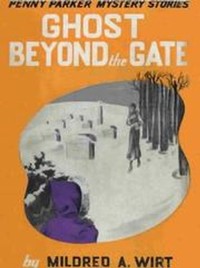
The first chapter of Ghost Beyond the Gate opens not with a ghost but with an iceboat. Penny Parker and her friend Louise Sidell race across Big Bear River at forty miles an hour, the sail from an old tent and spars from a wood lot. The boat capsizes; both girls slide across the ice. The scene establishes a voice that is brisk, physical, and fond of near-disaster—Penny lands with her parka awry and goggles hanging on one ear. The catalog lists this as a ghost story, but the excerpts offer no spectral figure in the first chapter. Instead, the mystery is grounded in a woman in black, a locked gate, and a cemetery meeting. The ghost is a promise, not a presence.
Iceboats and Snowdrifts: The Physical World of the Excerpts
The excerpts emphasize movement across frozen terrain: iceboats, buses, trudging through uncleared roads. Penny’s first action is to build the Icicle herself, and her second is to crash it. The prose lingers on the roar of runners, the tilt of the boat, the sting of wind. Later, she follows a woman on foot through snow, perches on a rail fence, and plans a night watch. The setting is not merely background but a source of friction—snow slows pursuit, ice threatens balance. The catalog subject “Adventure stories” fits this emphasis on physical ordeal, while “Ghost stories” remains a label the text has not yet earned in the provided pages.
The Woman in Black: A Detective’s Clue, Not a Specter
Penny’s investigation centers on a living woman, not a ghost. She follows a “woman in black” from a bus to a padlocked gate at the Harrison estate, noting the cheap quality of her clothing and reasoning she must be a servant or caretaker. The woman’s link to Oakland Cemetery—a possible meeting place—is deduced from geography, not supernatural events. Penny’s logic is practical: “If she lives here, it would be logical for her to specify Oakland Cemetery as a meeting place.” The catalog subject “Women detectives” is borne out by Penny’s methodical observation, but the “Mystery and detective stories” label is more accurate than “Ghost stories” for the evidence at hand.
The Missing Father and the Housekeeper’s Reluctance
Penny’s father has disappeared, and the housekeeper Mrs. Weems is anxious. When Penny proposes a night visit to the estate, Mrs. Weems protests: “Two girls alone at night! I can’t give my consent.” Penny persuades her by invoking duty, and Mrs. Weems agrees reluctantly. The exchange reveals a domestic subplot—the missing parent—that is not listed in the catalog subjects but drives Penny’s urgency. The housekeeper’s fear of a ghost (“Penny, what are you letting me in for?”) is the only mention of the supernatural in the excerpts, and it is treated as a joke. The catalog’s “Ghost stories” subject may reflect the title’s promise rather than the text’s delivery.
The excerpts from Ghost Beyond the Gate show a mystery built on tangible clues—a padlocked gate, a bus route, a woman’s clothing—rather than spectral events. Readers should expect a detective story with a strong physical setting and a heroine who acts before she theorizes. The ghost of the title may yet appear, but the evidence suggests it will be explained, not embraced.
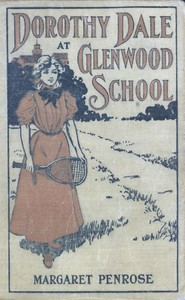
There’s a sturdy, uncomplicated warmth in watching Penny chase a flesh-and-blood mystery through the winter, knowing the ghost is just a rumor. It reminds me of how the girls at Glenwood School handle their own adventures—grounded, brave, and practical. Both books share that plainspoken, honest step, which I’ve always treasured. Dorothy Dale at Glenwood School — Inside the Classic holds that same kindly, realistic spirit, like an old friend sitting quietly nearby.
There are no reviews for this eBook.
There are no comments for this eBook.
Reader reflection
Take a moment to reflect on this book
Create a short personal record of your experience with this book.
Your progress
0
/
10
2
What was your overall reaction to the book?
3
Would you encourage someone else to read it?
4
Did the language feel accessible?
5
Would you start a conversation about this book?
6
How did the pace of the book feel?
7
Would you read this book again?
8
Was the book easy to understand?
9
In one sentence, what did you learn?
10