1

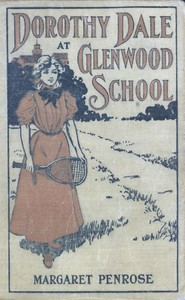
Dorothy Dale at Glenwood School — Inside the Classic
(0 User reviews)
465
Project Gutenberg
2010
Not confirmed
Schools -- Juvenile fiction; Friendship -- Juvenile fiction; Girls -- Societies and clubs -- Juvenile fiction; Boarding school students -- Juvenile fiction; Teasing -- Juvenile fiction
Readers of public-domain and historical texts
Project Gutenberg digital edition
en
Edition facts
Words
48,079
Reading time
210 min
Text sections
7
Dorothy Dale at Glenwood School — Inside the Classic can be approached with a clearer sense of reading commitment from its source measurements: 48,079 words, 3 hr 30 min estimated reading time, and 7 detected text sections.
The text analysis averages about 14.7 words per sentence, while the detected sections provide another way to judge how the source is divided.
Project Gutenberg metadata also associates the work with “Schools -- Juvenile fiction,” connecting these edition facts with the source record’s subject description.
Source:
Project Gutenberg record #33530
Dorothy Dale, called 'Little Captain' by her father, leaves home for Glenwood School with her friend Tavia, facing new social dynamics and a rival in Viola. The story contrasts domestic affection with boarding-school independence, using precise dialogue and recurring motifs like hats, money, and nicknames.
Editorial Edition Score
4.7/5
★★★★★
★★★★★
Calculated from edition completeness, EPUB availability, text structure and catalogue metadata. Not a user rating.
How this score is calculated
- Description quality20 pts
- Title & short description10 pts
- Source metadata20 pts
- Text length15 pts
- Chapters / structure15 pts
- EPUB file integrity20 pts
Total of 100 points, scaled to a 2.5-5.0 range. Editions with an empty description or a missing EPUB file are not scored.
Edition quality
Public-domain source text
Read the source text
The source text is kept in the dedicated reader, separate from this catalogue record and its commentary.
The first chapter establishes Dorothy Dale's intimate relationship with her father, Major Dale, whom she calls 'daddy' and who calls her 'Little Captain.' Their banter about a new hat—'two, one for Sunday and one for every day'—reveals a family emerging from financial scrimping into modest comfort. The major's caution that 'mere money can bring happiness' depends on 'proper use' sets a moral tone that will be tested at Glenwood School.
Dorothy's friend Tavia (Octavia Travers) provides comic relief with her impulsive nicknames, such as dubbing Viola 'Fiddle' from her grandfather's violin. The opening chapters contrast domestic warmth—Dorothy's brothers Roger and Joe, Aunt Libby's gingham apron—with the excitement and anxiety of leaving home. The narrative voice shifts between sentimental description and brisk dialogue, with Tavia's irreverence puncturing Dorothy's earnestness.
Nicknames and Naming as Social Currency
Throughout the excerpts, characters are defined by the names others give them. Major Dale calls Dorothy 'Little Captain,' a military term that implies leadership and responsibility. Tavia immediately renames Viola 'Fiddle' after learning her grandfather was a violinist, declaring it 'lots better than the vegetables.' This impulse to rename reflects Tavia's desire to control social dynamics through humor. Dorothy, in contrast, uses formal address and resists Tavia's irreverence. The pattern suggests that naming is a form of power: who gets to name whom, and whether the nickname sticks, indicates social standing. When Tavia says she will give Viola 'a run for her money,' she frames their rivalry as a contest, with nicknames as weapons.
The Tension Between Domestic Sentiment and School Independence
The opening chapters dwell on the pain of parting. Dorothy's brother Roger 'rubbed his pretty eyes almost sightless trying not to cry,' and Major Dale feels 'a great big slice of sunshine had suddenly darted under a heavy black cloud' when she leaves. Yet Dorothy resolves to be 'young-lady-like, and not crying for those left behind.' This tension between clinging to home and embracing school life recurs in small details: Dorothy keeps a note-book for budgeting, but Tavia jumps into the aisle of the train to 'straighten out.' The narrative gives equal weight to the emotional cost of leaving and the excitement of new people. The reader sees Dorothy torn between her role as 'Little Captain' at home and her unknown identity at Glenwood.
Objects as Markers of Character and Class
Specific items carry symbolic weight. Dorothy's longing for a 'brand-new hat' with 'ribbons and all' signals her family's recent financial relief. Tavia's straw sailor hat and box of 'Alice's best mixed—all chocolate too' show her practical, pleasure-seeking nature. The trunk-packing scene and the remark 'It's a comfort to have all our things go by express' highlight the girls' material concerns. Even the porter who hands them off the train without asking 'by your leave' is a marker of the social order they inhabit. These objects are not mere props; they reveal anxieties about appearance, belonging, and the transition from home to school. The narrative uses them to ground abstract emotions in tangible, period-specific details.
Readers should attend to the way Penrose balances Dorothy's earnestness with Tavia's irreverence, and how minor characters like Viola and her mother are introduced through dialogue rather than description. The excerpts do not reveal the full plot, but the patterns of naming, parting, and material concern suggest a story about negotiating identity within a new social hierarchy. Pay attention to who gets the last word in conversations—it often signals who holds the upper hand.
Years at this desk have shown me how a girl’s nickname, like Little Captain, can steady her through strange halls, much as a quiet gate in another tale lets her walk toward the unknown. Dorothy’s hats and careful pennies feel like old friends beside that Ghost Beyond the Gate — Reading Notes, whose margins I’ve traced more than once, finding the same hush between leaving home and finding oneself. There’s a kinship there, soft as a library’s afternoon light.
There are no reviews for this eBook.
There are no comments for this eBook.
Reader reflection
Before you leave, reflect on the book
Use these questions to collect your thoughts before moving on.
Your progress
0
/
10
2
Was reading this book enjoyable?
3
Would you pass this book on to a friend?
4
How demanding did the text feel?
5
Would you start a conversation about this book?
6
How distinctive were its ideas or approach?
7
Did any part of the book stay with you emotionally?
8
Could you follow the author’s main argument?
9
What did this book teach you most?
10