1

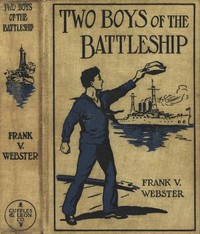
Two Boys of the Battleship; Or, For the Honor of Uncle Sam — Themes and Context
(0 User reviews)
33
Project Gutenberg
2011
Not confirmed
War stories; United States. Navy -- Juvenile fiction; Battleships -- Juvenile fiction; Revolutions -- Juvenile fiction
Readers of public-domain and historical texts
Project Gutenberg digital edition
en
Edition facts
Words
47,237
Reading time
206 min
Text sections
5
Before opening Two Boys of the Battleship; Or, For the Honor of Uncle Sam — Themes and Context, the edition data offers a quick orientation: 47,237 words, 3 hr 26 min estimated reading time, and 5 detected text sections.
The text analysis averages about 14.6 words per sentence, while the detected sections provide another way to judge how the source is divided.
Project Gutenberg metadata also associates the work with “War stories,” connecting these edition facts with the source record’s subject description.
Source:
Project Gutenberg record #36323
This editorial note examines how Frank V. Webster structures the naval adventure through storm openings, drill sequences, and the movement from training grounds to a South American revolution, using recurring images of waves, machinery, and official orders.
Editorial Edition Score
4.7/5
★★★★★
★★★★★
Calculated from edition completeness, EPUB availability, text structure and catalogue metadata. Not a user rating.
How this score is calculated
- Description quality20 pts
- Title & short description10 pts
- Source metadata20 pts
- Text length15 pts
- Chapters / structure15 pts
- EPUB file integrity20 pts
Total of 100 points, scaled to a 2.5-5.0 range. Editions with an empty description or a missing EPUB file are not scored.
Edition quality
Public-domain source text
Read the source text
The source text is kept in the dedicated reader, separate from this catalogue record and its commentary.
The novel opens with a storm at sea, a recurring image that establishes the brothers' competence and the precariousness of their situation. The first chapter, “In the Storm,” plunges readers into a dory motor boat where Frank and Ned Arden battle a “big comber” that sends water aboard. Webster uses the storm not merely as a backdrop but as a test of seamanship and brotherly coordination, with Frank at the wheel and Ned tending the motor. This opening scene sets a pattern: the boys face natural and man-made challenges through quick thinking and teamwork.
From Dory to Battleship: The Structure of Enlistment
The narrative moves deliberately from the brothers' civilian life to their naval service. After the storm, they are robbed in New York, which prompts the decision to enlist. The chapter “Let's Enlist!” marks a structural pivot: the setting shifts from the open sea and city streets to the training station and barracks. Webster devotes several chapters to the routines of enlistment, including target practice and boat drills, before the plot advances. This slow build emphasizes the discipline required for naval life and contrasts with the earlier, more chaotic storm scene.
Recurring Images: Waves, Orders, and Machinery
Webster repeats key images to unify the story. The storm's “green, foam-capped water” returns in later descriptions of heavy seas during the voyage south. The phrase “ordered South” echoes through the text, first as a wireless command, then as a repeated hope for the brothers. Machinery—the dory's motor, the battleship's big guns, the turrets—appears in both action and exposition. The author even includes a brief lecture on drill routines, breaking the narrative to explain that “the government does not want life aboard ship to become monotonous.” These recurring elements give the story a coherent texture.
Movement Between Scenes: From Training to Revolution
The plot advances through a series of clear geographic and thematic shifts. After the training station, the brothers board the battleship, then engage in target practice and a brave act before receiving orders to sail south. The movement from the familiar Atlantic coast to the fictional republic of Uridio is marked by a change in tone: the earlier chapters focus on learning naval skills, while later chapters introduce political complications and the possibility of combat. Webster signals these shifts through dialogue—a petty officer announces the wireless orders—and through the brothers' private hopes about their uncle's property.
Voice and Dialogue: The Sailor's Skepticism
Webster uses dialogue to reveal character and advance the plot. When Frank and Ned express eagerness to go south, a blue-jacket responds with skepticism: “Money invested, and you working for Uncle Sam? Tell me something easier to believe.” This exchange not only provides a moment of humor but also underscores the brothers' secret motive. The sailor's voice—colloquial, direct, and slightly cynical—contrasts with the brothers' more earnest tone. Webster avoids lengthy interior monologue, letting conversations carry exposition and emotional weight. The result is a brisk, action-driven narrative that still allows for moments of reflection.
Readers may find it useful to track how Webster balances technical detail with adventure. The novel's structure—storm, enlistment, training, voyage, revolution—follows a clear arc, but the author often pauses for explanatory passages about naval life. These sections, while informative, can slow the pace. Pay attention to how the brothers' private goal (recovering their uncle's fortune) interacts with their public duty. The excerpts suggest that this tension drives much of the later plot, though the full resolution is not available here.
There’s something about the way those old books hold a steady course — from the drill deck to the rolling wave — that makes me think of the quieter stretches in The Motor Boys Across the Plains; or, The Hermit of Lost Lake, where the engine hums and the hours pass like water. The Motor Boys Across the Plains; or, The Hermit of Lost Lake — Themes and Context brings back that same unhurried feeling, a small anchor in a changing world.
There are no reviews for this eBook.
There are no comments for this eBook.
Reader reflection
Before you leave, reflect on the book
Use these questions to collect your thoughts before moving on.
Your progress
0
/
10
2
What was your overall reaction to the book?
3
Would you pass this book on to a friend?
4
Did the language feel accessible?
5
Did the book deliver what you hoped for?
6
How would you describe its reading pace?
7
How much did the book move you?
8
Did anything about the book feel genuinely new?
9
What did this book teach you most?
10