1

Swamp Island — A Reader’s Guide
(0 User reviews)
303
Project Gutenberg
2011
Not confirmed
Adventure and adventurers -- Juvenile fiction; Mystery and detective stories; Parker, Penny (Fictitious character) -- Juvenile fiction; Women detectives -- Juvenile fiction
Readers of public-domain and historical texts
Project Gutenberg digital edition
en
Edition facts
Words
43,165
Reading time
188 min
Text sections
7
This digital edition of Swamp Island — A Reader’s Guide is described by source-level measurements including 43,165 words, 3 hr 8 min estimated reading time, and 7 detected text sections.
The text analysis averages about 10.5 words per sentence, while the detected sections provide another way to judge how the source is divided.
Project Gutenberg metadata also associates the work with “Adventure and adventurers -- Juvenile fiction,” connecting these edition facts with the source record’s subject description.
Source:
Project Gutenberg record #35083
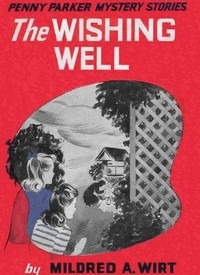
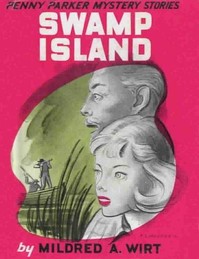
Penny Parker's swamp outing turns ominous when a boar attack, a missing dog, and a mysterious metallic pounding hint at hidden dangers on Swamp Island.
Editorial Edition Score
4.7/5
★★★★★
★★★★★
Calculated from edition completeness, EPUB availability, text structure and catalogue metadata. Not a user rating.
How this score is calculated
- Description quality20 pts
- Title & short description10 pts
- Source metadata20 pts
- Text length15 pts
- Chapters / structure15 pts
- EPUB file integrity20 pts
Total of 100 points, scaled to a 2.5-5.0 range. Editions with an empty description or a missing EPUB file are not scored.
Edition quality
Public-domain source text
Read the source text
The source text is kept in the dedicated reader, separate from this catalogue record and its commentary.
From the first chapter, Penny Parker’s skiff cuts through “still, sluggish water” as she and Louise Sidell head toward a wooded point for Cherokee roses. The setting is established with sensory detail: a giant crane trumpets, Bones the dog stirs, and the swamp’s wild growth rises “densely from the water’s edge.” Trapper Joe’s warning to “stay in the skiff” immediately signals risk. The opening balances a leisurely flower-gathering mission with undercurrents of danger, setting up a pattern where Penny’s curiosity repeatedly overrides caution.
A Boar and a Vanished Dog
By chapter 16, the threat becomes physical: “The boar had turned and was coming for her again.” Penny is treed by a wild boar, a scene that escalates the swamp’s menace from atmospheric to immediate. Earlier, Louise’s dog Bones disappears, and the girls’ search leads them deeper into the swamp. Trapper Joe’s evasive comments—like “things goes on in the swamp that it’s best not to see”—hint at concealed activity. The boar attack and the missing dog are not isolated incidents; they are linked to the Hawkins family’s suspicious behavior, which Penny observes but hesitates to discuss openly.
The Metallic Pounding and Black Island
A recurring sound—a “faint, metallic pounding” described as “Bing-ping-ping! Ping-ping!”—draws Penny’s attention. She identifies it as coming from Lookout Island. This noise, combined with Trapper Joe’s description of Black Island as a place “where no man has ever set foot,” creates a mystery that drives the plot. Joe explains that only a few swampers know the channels to Black Island, and a wrong turn could leave one lost for days. The pounding suggests human activity in a supposedly wild area, raising questions about what—or who—is there.
Penny’s Observations and Restraint
Penny is an active observer: she notes the Hawkins’ behavior on the swamp road, but “held her tongue” because she isn’t sure of Joe’s loyalties. Her internal reflection—“After all, what do I know about Joe?”—shows a cautious side. She senses that the old trapper is unwilling to share his true opinion, and she respects that boundary. This restraint contrasts with her earlier eagerness to push deeper into the swamp. The narrative balances Penny’s impulsiveness with moments of strategic silence, making her a more layered protagonist than a simple adventurer.
The Swamp as a Character
The swamp is not just a setting but an active force. It is described with words like “gloomy,” “sluggish,” and “deeply shadowed.” The water hyacinths, the crane’s angry trumpeting, and the raccoons drowsing on branches all contribute to a vivid ecosystem. Trapper Joe’s warning that “if ye take a wrong twist, y’er apt to wind up anywheres” emphasizes the swamp’s labyrinthine nature. The environment dictates the characters’ movements and limits their knowledge—Penny and Louise can only go where the channels allow, and even Joe admits he hasn’t been to Black Island in years.
As you read, pay attention to how the swamp’s physical details—the sounds, the vegetation, the animal life—are used to build suspense. Penny’s decisions are often made in response to what she hears or sees in the environment, not just what people tell her. The excerpts suggest that the mystery unfolds through sensory clues rather than direct exposition. Notice how the author withholds information: characters speak evasively, and the full picture of the Hawkins’ activities remains unclear. This technique keeps the reader as uncertain as Penny.
The rain kept time with the metallic pounding in Swamp Island — A Reader’s Guide, and I found myself thinking about how a place’s secrets only surface when you’re alone. That same quiet loneliness drifted through Annie o' the Banks o' Dee — Text and Context, where the river holds its own patient murmur. I set one down, picked up the other, and the afternoon simply continued.
There are no reviews for this eBook.
There are no comments for this eBook.
Reader reflection
How did this book work for you?
Your answers remain private and are stored only in this browser.
Your progress
0
/
10
2
Did this book hold your interest?
3
Is this a title you would suggest to others?
4
How demanding did the text feel?
5
How much did the book move you?
6
Was the book what you thought it would be?
7
Was the book moving at the right speed?
8
How useful did the reading feel?
9
What did this book teach you most?
10