1

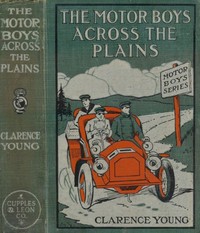
The Motor Boys Across the Plains; or, The Hermit of Lost Lake — Themes and Context
(0 User reviews)
4044
Project Gutenberg
2013
Not confirmed
Great Plains -- Juvenile fiction; Mystery and detective stories; Automobiles -- Juvenile fiction; Hermits -- Juvenile fiction
Readers of public-domain and historical texts
Project Gutenberg digital edition
en
Edition facts
Words
52,550
Reading time
229 min
Text sections
6
The Motor Boys Across the Plains; or, The Hermit of Lost Lake — Themes and Context can be approached with a clearer sense of reading commitment from its source measurements: 52,550 words, 3 hr 49 min estimated reading time, and 6 detected text sections.
The text analysis averages about 13.6 words per sentence, while the detected sections provide another way to judge how the source is divided.
Project Gutenberg metadata also associates the work with “Great Plains -- Juvenile fiction,” connecting these edition facts with the source record’s subject description.
Source:
Project Gutenberg record #43509
This editorial note examines how Clarence Young's 1907 adventure novel uses episodic road-trip structure, recurring images of lostness and discovery, and swift scene shifts between open plains and hidden mountain settings to build suspense around the elusive Lost Lake and its hermit.
Editorial Edition Score
4.7/5
★★★★★
★★★★★
Calculated from edition completeness, EPUB availability, text structure and catalogue metadata. Not a user rating.
How this score is calculated
- Description quality20 pts
- Title & short description10 pts
- Source metadata20 pts
- Text length15 pts
- Chapters / structure15 pts
- EPUB file integrity20 pts
Total of 100 points, scaled to a 2.5-5.0 range. Editions with an empty description or a missing EPUB file are not scored.
Edition quality
Public-domain source text
Read the source text
The source text is kept in the dedicated reader, separate from this catalogue record and its commentary.
From the opening chapter, where a steam-powered automobile rams an ox cart, Clarence Young establishes a pattern of sudden collisions—between machine and animal, civilization and wilderness, known and unknown. The Motor Boys series, here in its fourth volume, relies on a loose episodic structure that strings together encounters with prospectors, cougars, and mysterious hermits. But beneath the surface of this boys' adventure lies a careful choreography of movement: the narrative shifts rapidly from open plains to cramped caves, from daylight travel to moonlit discoveries, each transition tightening the mystery of Lost Lake.
Episodic Road-Trip Structure
The novel unfolds as a series of discrete episodes, each chapter heading like a waypoint on a map: “Ramming an Ox Cart,” “A Nest of Serpents,” “The Deserted Cabin.” The boys and their professor companion never stay in one place long. This structure mirrors the uncertainty of their quest—they are not following a fixed route but reacting to obstacles and rumors. The prospector Johnson, met by chance, provides the first concrete clue about Lost Lake, but his information is fragmentary, passed along like a traveler’s tale. The narrative resists a single through-line; instead, it accumulates details through brief, vivid scenes. This episodic quality keeps the reader oriented toward the next encounter rather than a distant goal, making the journey itself the focus.
Recurring Images of Lostness and Discovery
Lostness is not just a plot point but a recurring image. Johnson admits he “got lost” in the hills; the boys repeatedly take “a strange road”; the lake itself is defined by its absence—it has been “lost” for forty years. Even the hermit is described as a “sort of wild man” who may or may not exist. Young uses physical disorientation to echo the uncertainty of the search. The lake is never seen directly in the excerpts, only talked about, which builds anticipation. The gold on its shores is described as “pebbles,” a small, tangible detail that contrasts with the vast, empty landscape. This tension between the promise of discovery and the reality of being lost drives the narrative forward.
Swift Movement Between Settings
The story moves with the speed of the automobile itself. One moment the characters are on the open plains, the next they are in a “lonely cabin” or a cave. The transition from the prospector’s campfire conversation to the next chapter’s “Lonely Cabin” is abrupt, skipping over travel time. This technique keeps the pace brisk and emphasizes the isolation of each setting. The cabin, the cave, the lake—each location feels self-contained, a stage for a new threat or clue. The automobile, a steam-powered machine, is both a means of escape and a source of noise that attracts attention (Johnson hears it from afar). It anchors the boys’ mobility in a landscape that otherwise seems trackless.
The Hermit as an Unseen Presence
The hermit of Lost Lake is introduced through hearsay long before he appears. Johnson warns the boys to “look out for the old hermit,” but admits he doesn’t believe that part of the story. This layered uncertainty—a character who may be real, may be a legend, may be a murderer—creates a sense of threat without requiring immediate confrontation. The hermit is tied to the lake’s mystery; both are hidden, both are sought. The excerpts do not reveal whether the hermit is encountered, but the structure of the novel (with chapters like “The Den of the Hermit” and “The Hermit’s Identity”) suggests a gradual unveiling. Young uses the hermit as a focal point for the boys’ fears and the reader’s curiosity, a figure who embodies the danger of the unknown.
Readers approaching The Motor Boys Across the Plains should pay attention to the gaps between episodes—the unspoken miles, the nights between campfires. The novel’s power lies not in its destination but in the repeated act of setting out again. Each chapter is a fresh start, a new road, a new rumor. The hermit and the lake remain just out of reach, and the story’s structure ensures that the search itself, with all its detours and delays, becomes the real adventure.
There’s something about that old story’s longing for a hidden place, and the quiet ache of finding it inhabited by someone just as lost. It reminded me of another book, one I keep thinking back to—Little Robins' Love One to Another — Text and Context. Both feel like gentle searches for the same warm, human thing, rather than adventure for its own sake.
There are no reviews for this eBook.
There are no comments for this eBook.
Reader reflection
What did you think of this book?
Answer a few questions and save a private reflection on this device.
Your progress
0
/
10
2
How did the book work for you overall?
3
Would you encourage someone else to read it?
4
What was the reading difficulty like?
5
How would you rate its originality?
6
Is this a title worth rereading?
7
Did it raise ideas you would like to talk about?
8
How useful did the reading feel?
9
What did this book teach you most?
10