1

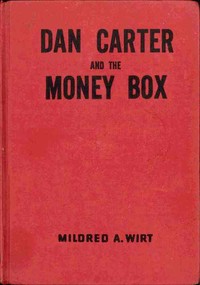
Dan Carter and the Money Box — Text and Context
(0 User reviews)
522
Project Gutenberg
2012
Not confirmed
Mystery and detective stories; Theft -- Juvenile fiction; Tramps -- Juvenile fiction; Cub Scouts -- Juvenile fiction
Readers of public-domain and historical texts
Project Gutenberg digital edition
en
Edition facts
Words
40,991
Reading time
179 min
Text sections
7
The source record for Dan Carter and the Money Box — Text and Context measures this digital text at 40,991 words, 2 hr 59 min estimated reading time, and 7 detected text sections.
The text analysis averages about 9.9 words per sentence, while the detected sections provide another way to judge how the source is divided.
Project Gutenberg metadata also associates the work with “Mystery and detective stories,” connecting these edition facts with the source record’s subject description.
Source:
Project Gutenberg record #41261
In this Cub Scout mystery, Dan Carter and Brad Wilber chase a thief who stole a money box from a recluse, while balancing den meetings, fundraising, and knightly codes. The narrative moves between stormy streets, a church basement, and a deserted house, using weather and setting to build tension.
Editorial Edition Score
4.7/5
★★★★★
★★★★★
Calculated from edition completeness, EPUB availability, text structure and catalogue metadata. Not a user rating.
How this score is calculated
- Description quality20 pts
- Title & short description10 pts
- Source metadata20 pts
- Text length15 pts
- Chapters / structure15 pts
- EPUB file integrity20 pts
Total of 100 points, scaled to a 2.5-5.0 range. Editions with an empty description or a missing EPUB file are not scored.
Edition quality
Public-domain source text
Read the source text
The source text is kept in the dedicated reader, separate from this catalogue record and its commentary.
The first chapter of Dan Carter and the Money Box drops readers directly into a storm. Dan and Brad, in slickers, battle wind and rain on their way to a Cub Scout meeting. The weather is not mere backdrop—it forces the boys to halt under an awning, blinds them with droplets, and nearly causes a collision with a stranger. This opening establishes a pattern: the physical environment repeatedly shapes the action, from the storm that introduces the tramp to the high water that later strands characters. The church, with its dimly lit windows, becomes a recurring landmark, a fixed point in a world of sudden downpours and muddy streets.
Movement Between Indoor and Outdoor Spaces
The story alternates between enclosed, orderly spaces and the unpredictable outdoors. The church basement, where Den 2 meets, is a controlled setting: Cubs work on armor, discuss rules, and plan fundraising. Outside, the boys encounter the tramp, chase a thief, and navigate flooded areas. The Merrimac house, initially a site of rejection (the old man refuses to answer the door), becomes a crime scene when a pair of legs protrudes from an open kitchen window. This shift from refusal to violation marks a key transition. The narrative often uses doorways and windows as thresholds: the tramp huddles against a wall, the thief escapes through a window, and the Cubs peer into a “deserted” house. These boundaries between inside and outside are repeatedly crossed, often without invitation.
Recurring Images: Legs, Windows, and Tin Boxes
Certain images recur with precision. A pair of legs seen through a window signals the thief’s presence—first as a comic surprise, then as a clue. The tin money box, mentioned in the frontispiece caption, is the object of pursuit, but the excerpts show it only at the moment of discovery: “Triumphantly, he brought out the tin box.” The box itself is never described in detail; its value lies in what it represents—the building fund, the community’s trust, and the Cubs’ pledge. Windows appear repeatedly: the church windows shine dimly, the Merrimac kitchen window is open, and later a window is used for entry or observation. These visual anchors give the reader a concrete way to track the investigation.
The Cub Scout Code as Structural Framework
The den meeting in Chapter 8 establishes three knightly rules: “Be Always Ready. Be Prepared. And Do Good Unto Others.” These rules are not just thematic—they structure the boys’ actions. Dan and Brad’s pursuit of the thief, their return to Mr. Merrimac’s house, and their efforts to raise money all reflect the code. The phrase “Do Your Best,” which appears as a chapter title and a repeated motto, becomes a test: the Cubs must balance their pledge list with the unfolding mystery. The code provides a moral compass without heavy-handed moralizing. It also creates tension when the boys face situations where readiness and preparedness conflict—such as when they must decide whether to chase a suspect or report to the meeting.
Weather as a Narrative Engine
The storm that opens the book is not a one-time event. High water, cold temperatures, and the threat of sleet recur throughout the excerpts. The weather forces characters to take shelter, alters their routes, and isolates them. The tramp is first seen huddling against a wall during the storm; later, the high water chapter suggests flooding becomes a plot obstacle. The weather also affects pacing: scenes in the rain feel urgent and compressed, while indoor scenes allow for reflection. The author uses weather to create natural deadlines—the Cubs must act before the storm worsens, before night falls, before the roads become impassable. This technique keeps the narrative moving and ties the mystery to the physical world.
Readers should pay attention to how the setting—especially the contrast between the church basement and the outdoor spaces—shapes the investigation. The money box is a small object, but its recovery depends on the Cubs’ ability to read the landscape: a pair of legs, an open window, a tramp’s hiding place. The story rewards careful observation of details that might seem incidental, like the weather or the position of a building. The knightly code is not just talk; it is tested in action.
Reading about Dan Carter’s rainy hunt for that stolen money box, I remembered hiding under a porch with my own scout handbook, certain every shadow held a culprit. That same hush of a secret, smaller story—of far-off places and quiet courage—came back to me in Our Little Canadian Cousin — Key Ideas to Explore. Both felt like a lantern held out in a dim room.
There are no reviews for this eBook.
There are no comments for this eBook.
Reader reflection
Your personal reading reflection
Build a private reading journal entry for this title.
Your progress
0
/
10
2
Was reading this book enjoyable?
3
How likely are you to recommend this book?
4
How demanding did the text feel?
5
Which aspect of the book did you value most?
6
Did it raise ideas you would like to talk about?
7
How would you describe its reading pace?
8
How clear did the writing feel?
9
Which lesson or insight stayed with you?
10