1

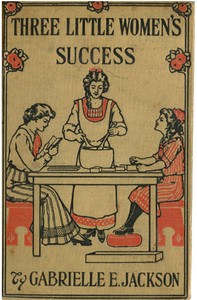
Three Little Women's Success: A Story for Girls — Text and Context
(0 User reviews)
653
Project Gutenberg
2012
Not confirmed
Christmas stories; Humanitarianism -- Juvenile fiction; Families -- Juvenile fiction; Businesswomen -- Juvenile fiction; African American women -- History -- Juvenile fiction; Confectionery -- Juvenile fiction
Readers of public-domain and historical texts
Project Gutenberg digital edition
en
Edition facts
Words
55,888
Reading time
243 min
Text sections
5
For Three Little Women's Success: A Story for Girls — Text and Context, the stored edition analysis reports 55,888 words, 4 hr 3 min estimated reading time, and 5 detected text sections.
The text analysis averages about 17.9 words per sentence, while the detected sections provide another way to judge how the source is divided.
Project Gutenberg metadata also associates the work with “Christmas stories,” connecting these edition facts with the source record’s subject description.
Source:
Project Gutenberg record #40401
An editorial note on Gabrielle E. Jackson's 'Three Little Women's Success,' focusing on its seasonal rhythm, the narrator's direct address to Jean Carruth, and the use of storm-bound scenes to heighten tension and character interdependence.
Editorial Edition Score
4.7/5
★★★★★
★★★★★
Calculated from edition completeness, EPUB availability, text structure and catalogue metadata. Not a user rating.
How this score is calculated
- Description quality20 pts
- Title & short description10 pts
- Source metadata20 pts
- Text length15 pts
- Chapters / structure15 pts
- EPUB file integrity20 pts
Total of 100 points, scaled to a 2.5-5.0 range. Editions with an empty description or a missing EPUB file are not scored.
Edition quality
Public-domain source text
Read the source text
The source text is kept in the dedicated reader, separate from this catalogue record and its commentary.
The narrator of Three Little Women's Success establishes an immediate intimacy with the reader by treating the fictional town of Riveredge as a living presence. October, we are told, “meant more than the five words usually imply,” and the opening chapter devotes several paragraphs to the season’s effect on the town’s pulse—crisp winds that “set blood stirring” and make strangers nod to one another. This personification of setting is not decorative; it becomes a structural device. The narrative returns to weather at key moments, using a blizzard in the excerpted chapters to isolate characters and force them to rely on one another. The storm is not merely atmospheric but functional, cutting off communication and stranding the Carruth household, thereby raising the stakes of a child’s illness.
Direct Address and the Reader’s Role
Jackson’s narrator frequently breaks the fourth wall to speak directly about Jean Carruth, the protagonist. In the opening chapter, the voice asserts that “Jean Carruth will remain Jean Carruth to the end of the story,” a promise that both reassures and frames the character as a fixed personality—impulsive, long-limbed, and “full of impulses.” This technique creates a conspiratorial tone, as if the reader is being let in on a secret about the character’s unchanging nature. Later, when Jean volunteers to watch through the night, the narrator has her say, “Even if I am only fourteen years old I can be a little woman,” which echoes the book’s title and reinforces the theme of youthful responsibility. The direct address is not consistent throughout the excerpts, but it appears at pivotal moments to underline character traits or moral lessons, making the reader a confidante rather than a passive observer.
Pace Shifts: From Bustle to Stillness
The narrative pace in the excerpts moves between two distinct rhythms. The early chapters are brisk and descriptive, matching the “busy bustle of active life” that October brings to Riveredge. Sentences are long and list-like, cataloging seasonal activities: “in the autumn it wakened to the busy bustle of active life and its preparations for the drawing together of all who dwelt therein.” This rapid, almost breathless accumulation of detail mirrors the town’s energy. In contrast, the storm-bound scenes slow to a near standstill. Dialogue becomes clipped and urgent, and actions are described in short, sequential beats: “A moment later Constance was struggling back to the house through the blinding storm and snowdrifts.” The shift in pace is not abrupt but modulated by the weather, which acts as a narrative brake. The reader is pulled from the general hum of town life into a confined, tense household where every sound and gesture matters.
Voice and the Use of Dialect
Jackson employs a range of vocal registers to distinguish characters and social positions. The Carruth sisters speak in a polished, slightly formal English—Constance’s lines are measured and maternal (“I shall be on the couch in the library and can see this window from there”). In contrast, the maid Lilly and the character Mammy are given dialect spellings and colloquial rhythms, though the excerpts provide only glimpses. More notable is the narrator’s own voice, which shifts between an omniscient, almost journalistic tone and a folksy, confiding one. Phrases like “I dare say” and “you may be sure” pepper the narration, creating a sense of oral storytelling. The narrator also uses exclamations (“Great Scott!”) and rhetorical questions, blurring the line between character dialogue and narrative commentary. This flexibility in voice gives the prose a conversational quality that aligns with the book’s intended audience—girls who might imagine themselves as part of the Carruth circle.
Readers attentive to narrative craft will notice how Jackson uses the weather not just as backdrop but as a mechanism for testing character. The blizzard that strands the family is a pressure cooker, forcing decisions and revealing loyalties. Pay attention to how the narrator’s direct addresses to Jean Carruth create a bond with the reader, and how the pace of the prose mirrors the emotional temperature of each scene. These choices, rather than plot twists, give the story its particular texture.
There’s a particular calm in watching girls huddle through a storm, their strengths only surfacing when the windows rattle. I remember that same hush in the editorial notes on Three Little Women’s Success, how isolation draws out quiet character. It lingers, that feeling, when I turn to The Carter Girls’ Mysterious Neighbors — A Reader’s Guide, as if neighbors, too, hide their weather.
There are no reviews for this eBook.
There are no comments for this eBook.
Reader reflection
How will you remember this book?
Save your reaction, strongest insight, and memorable passage.
Your progress
0
/
10
2
How did the book work for you overall?
3
Would you pass this book on to a friend?
4
What was the reading difficulty like?
5
Did it raise ideas you would like to talk about?
6
Did any part of the book stay with you emotionally?
7
How clearly were the main ideas presented?
8
What did you think about the pace?
9
What changed or sharpened your thinking?
10