1

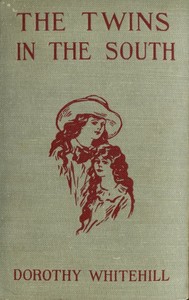
The twins in the South — Reading Companion
(0 User reviews)
411
Project Gutenberg
2012
Not confirmed
Schools -- Juvenile fiction; Twins -- Juvenile fiction; Sisters -- Juvenile fiction; Boarding school students -- Juvenile fiction; Virginia -- Juvenile fiction; Interpersonal relations -- Juvenile fiction
Readers of public-domain and historical texts
Project Gutenberg digital edition
en
Edition facts
Words
31,079
Reading time
136 min
Text sections
24
The twins in the South — Reading Companion can be approached with a clearer sense of reading commitment from its source measurements: 31,079 words, 2 hr 16 min estimated reading time, and 24 detected text sections.
The text analysis averages about 14.1 words per sentence, while the detected sections provide another way to judge how the source is divided.
Project Gutenberg metadata also associates the work with “Schools -- Juvenile fiction,” connecting these edition facts with the source record’s subject description.
Source:
Project Gutenberg record #38834
At Hilltop School, newly reunited twins Janet and Phyllis navigate sisterhood, school rivalries, and the pressure of extracurricular achievements, with tensions between the Old and New Wings shaping their friendships and choices.
Editorial Edition Score
4.8/5
★★★★★
★★★★★
Calculated from edition completeness, EPUB availability, text structure and catalogue metadata. Not a user rating.
How this score is calculated
- Description quality20 pts
- Title & short description10 pts
- Source metadata20 pts
- Text length15 pts
- Chapters / structure15 pts
- EPUB file integrity20 pts
Total of 100 points, scaled to a 2.5-5.0 range. Editions with an empty description or a missing EPUB file are not scored.
Edition quality
Public-domain source text
Read the source text
The source text is kept in the dedicated reader, separate from this catalogue record and its commentary.
From the opening scene, Dorothy Whitehill establishes a central tension: the school principal, Miss Hull, believes in separating sisters, but the twins Janet and Phyllis—reunited only a year earlier—resist. Phyllis’s firm, winning smile wins their shared room, but the victory hints at a pattern: the twins must repeatedly assert their bond against institutional and social pressures. The school itself is divided into the Old Wing and New Wing, a rivalry that colors friendships, club memberships, and even archery contests. Whitehill’s dialogue-driven narrative reveals character through quick exchanges and internal conflicts, as when Janet excels at archery but worries that success will distance her from Phyllis.
The Rivalry of the Wings
The school’s physical layout mirrors its social structure. The Old Wing and New Wing are not just dormitories but factions, each with its own loyalties and traditions. When Janet wins an archery contest, Ethel—a girl from the opposing wing—offers grudging praise, and Janet responds by inviting her to target practice, downplaying the rivalry. Yet the tension persists: the Dramatic Club, a prestigious institution, has historically drawn members from the Old Wing, and when two Sophomores from the New Wing are nominated, it is seen as a potential victory for their side. Whitehill uses the wings to explore how group identity can both unite and divide, with characters like Gladys exulting over “what a victory it would be for the Old Wing.”
Twinship as a Deliberate Choice
Janet and Phyllis are twins who found each other only a year before the story begins, making their bond a conscious decision rather than a given. Phyllis declares they have “such a lot of time to make up,” and they insist on rooming together despite Miss Hull’s policy. This backstory gives weight to their closeness: when Janet fears that archery success might hurt Phyllis, she considers refusing a team spot. Sally, a friend, firmly discourages that idea, saying “You are going to do nothing of the kind.” The twins’ relationship is tested not by overt conflict but by the quiet strain of separate interests—Janet’s athleticism and Phyllis’s literary ambitions—forcing them to negotiate independence within unity.
The Dramatic Club as a Social Crucible
The Dramatic Club at Hilltop is described as “a very important institution,” with membership based on literary appreciation, good looks, and acting ability. It typically admits only Juniors and Seniors, so the nomination of two Sophomores—Phyllis and Taffy—is unprecedented. The club’s selection process is opaque, driven by faculty recommendations and the whims of student leaders like “Poppy.” Whitehill uses the club to examine how prestige and custom shape school hierarchies. When Janet hears of the nomination, she is bewildered, and her friends’ excited chatter reveals how much status is at stake. The club’s two annual plays are not “usual amateur performances,” suggesting a level of seriousness that raises the stakes for the characters involved.
Whitehill’s novel offers a portrait of boarding school life where small decisions—a room assignment, an archery match, a club nomination—carry weight. Readers may notice how the author uses dialogue to advance both plot and character, often leaving inner thoughts implied rather than stated. The twins’ separate pursuits and the wing rivalry invite attention to how loyalty and ambition coexist in a close-knit community.
Reading about Janet and Phyllis navigating their separate worlds at Hilltop School, I kept thinking how some bonds grow stronger through distance, like roots finding each other underground. It reminded me of the quiet weight in Marion Berkley: A Story for Girls — A Reader’s Guide, where friendships echo the same gentle ache of belonging. That feeling stays long after the last page turns.
There are no reviews for this eBook.
There are no comments for this eBook.
Reader reflection
How did this book work for you?
Your answers remain private and are stored only in this browser.
Your progress
0
/
10
2
How did the book work for you overall?
3
Would you encourage someone else to read it?
4
How much effort did this book require?
5
How useful did the reading feel?
6
What did you think about the pace?
7
Is this a title worth rereading?
8
Was the book easy to understand?
9
In one sentence, what did you learn?
10