1

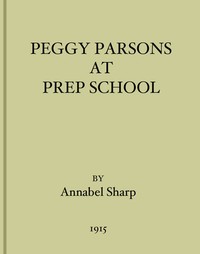
Peggy Parsons at Prep School — Key Ideas to Explore
(0 User reviews)
754
Project Gutenberg
2011
Not confirmed
Friendship -- Juvenile fiction; Boarding schools -- Juvenile fiction; Girls -- Juvenile fiction; Mystery fiction; Charity -- Juvenile fiction
Readers of public-domain and historical texts
Project Gutenberg digital edition
en
Edition facts
Words
48,261
Reading time
210 min
Text sections
18
This digital edition of Peggy Parsons at Prep School — Key Ideas to Explore is described by source-level measurements including 48,261 words, 3 hr 30 min estimated reading time, and 18 detected text sections.
The text analysis averages about 19.8 words per sentence, while the detected sections provide another way to judge how the source is divided.
Project Gutenberg metadata also associates the work with “Friendship -- Juvenile fiction,” connecting these edition facts with the source record’s subject description.
Source:
Project Gutenberg record #35730
Peggy Parsons arrives at Andrews finishing school with a defiant yawn and a blue silk kimono, setting off a chain of snowshoe mishaps, midnight serenades, and prep-school adventures. The narrative shifts from playful banter to brisk outdoor action, with a puppy stowing away on her snowshoe and a chance encounter near a boys' school.
Editorial Edition Score
4.7/5
★★★★★
★★★★★
Calculated from edition completeness, EPUB availability, text structure and catalogue metadata. Not a user rating.
How this score is calculated
- Description quality20 pts
- Title & short description10 pts
- Source metadata20 pts
- Text length15 pts
- Chapters / structure15 pts
- EPUB file integrity20 pts
Total of 100 points, scaled to a 2.5-5.0 range. Editions with an empty description or a missing EPUB file are not scored.
Edition quality
Public-domain source text
Read the source text
The source text is kept in the dedicated reader, separate from this catalogue record and its commentary.
The novel opens with a yawn—and a reprimand. Peggy Parsons, twisting her curly hair into a golden braid, is told by her new room-mate Katherine that yawning is not a manner taught at Andrews, a finishing school. The dialogue is quick and teasing, establishing a voice that alternates between Peggy's breezy defiance and Katherine's dry humor. The scene is lit by a single candle, and a rose tree sits in the room to ward off homesickness. Already the prose signals a world where rules are made to be bent, and where the smallest gesture—a yawn, a kimono labeled "For Midnight Fudge Parties"—carries weight.
Voice and Banter in the Dormitory
The early chapters rely heavily on dialogue to define character. Peggy and Katherine trade remarks with a rhythm that feels spontaneous: Peggy's "can't I even yawn if I want to?" is met with Katherine's deadpan "they teach us manners along with our French and mathematics." The exchange is not just exposition; it reveals a power dynamic. Peggy is impulsive, used to doing as she likes; Katherine is amused and observant, calling it "fun to see what happens." The narrator stays close to the girls' perspectives, using free indirect speech to blend their thoughts with the action. When the serenade begins, the prose shifts to breathless fragments: "Katherine—?" breathed Peggy excitedly. "Peggy—?" whispered Katherine. The pace accelerates, matching the sudden intrusion of the outside world into the candlelit room.
Snow, Paralyzed Feet, and a Parasite Puppy
A later excerpt shifts setting dramatically: from dormitory to a snowstorm. Peggy, snowshoeing alone, declares her left foot paralyzed. The young man who finds her laughs uncontrollably—until she discovers a plump puppy perched on the back of her snowshoe. The comedy is physical and self-deprecating. Peggy's indignation ("I hate, I hate you!") dissolves into wonder ("The—the—smart little thing!"). The narrator lingers on the absurdity: Peggy was "dying all by myself of something that I didn't have at all." The prose here is brisk, with short sentences and exclamations, mirroring the sudden shifts from panic to relief. The setting—a tea house near a boys' prep school called Anderwood—introduces a new social geography, and the pace slows again as the pair warm themselves by a roaring fire.
Pace and the Architecture of Surprise
Annabel Sharp structures scenes around small surprises. A serenade interrupts sleep; a puppy appears on a snowshoe; a tea house turns out to be near a boys' school. The pacing is not uniform: quiet, conversational stretches in the dormitory give way to brisk outdoor action. The narrator often withholds information until the last moment, as when Peggy's "paralyzed" foot is revealed to be carrying a stowaway. This technique keeps the reader off-balance, matching Peggy's own impulsiveness. The prose itself shifts register: from the formal "they teach us manners" to the colloquial "boo" and "rascal." The result is a narrative voice that feels both period-appropriate and lively, attuned to the rhythms of schoolgirl speech and the sudden jolts of adventure.
Readers may find it useful to track how the novel balances indoor and outdoor scenes. The dormitory chapters rely on dialogue and character interplay; the snowshoe episode emphasizes physical comedy and landscape. Notice how the narrator uses the weather—a storm, a candle, a rose tree—to set mood and to create obstacles that force Peggy to act. The presence of Anderwood, the boys' school, hints at a wider social world beyond Andrews, but the excerpts do not reveal how fully that world is developed. Pay attention to the rhythm of entrances and exits: characters appear suddenly, and the pace quickens or slows accordingly.
There’s something about Peggy’s unruly yawn that feels like the truest part of growing up—that stubborn refusal to be impressed. It reminds me of another girl’s quiet determination, the way Brenda builds her own world of friendships and small loyalties. Sometimes I think these old stories hold the same wistful air. Brenda, Her School and Her Club — Context and Discussion lingers in that same tender place.
There are no reviews for this eBook.
There are no comments for this eBook.
Reader reflection
What was your reading experience?
Capture what you thought, learned, and would like to remember.
Your progress
0
/
10
2
How much did you enjoy the reading experience?
3
Would you pass this book on to a friend?
4
How much effort did this book require?
5
How did the reading compare with what you expected?
6
How strong was your personal connection to the text?
7
How did the pace of the book feel?
8
Could you apply anything you learned?
9
In one sentence, what did you learn?
10