1

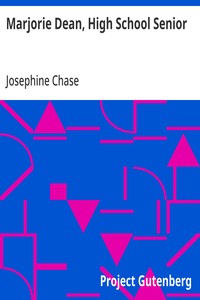
Marjorie Dean, High School Senior — Text and Context
(0 User reviews)
727
Project Gutenberg
2011
Not confirmed
High school students -- Juvenile fiction; Best friends -- Juvenile fiction; Young women -- Social life and customs -- Juvenile fiction; Interpersonal relations -- Juvenile fiction; High schools -- Juvenile fiction
Readers of public-domain and historical texts
Project Gutenberg digital edition
en
Edition facts
Words
78,322
Reading time
341 min
Text sections
8
Before opening Marjorie Dean, High School Senior — Text and Context, the edition data offers a quick orientation: 78,322 words, 5 hr 41 min estimated reading time, and 8 detected text sections.
The text analysis averages about 14.1 words per sentence, while the detected sections provide another way to judge how the source is divided.
Project Gutenberg metadata also associates the work with “High school students -- Juvenile fiction,” connecting these edition facts with the source record’s subject description.
Source:
Project Gutenberg record #36325
Josephine Chase's 1917 school story uses precise dialogue and descriptive detail to portray senior-year social dynamics, friendship, and community service among a group of girls in Sanford.
Editorial Edition Score
4.7/5
★★★★★
★★★★★
Calculated from edition completeness, EPUB availability, text structure and catalogue metadata. Not a user rating.
How this score is calculated
- Description quality20 pts
- Title & short description10 pts
- Source metadata20 pts
- Text length15 pts
- Chapters / structure15 pts
- EPUB file integrity20 pts
Total of 100 points, scaled to a 2.5-5.0 range. Editions with an empty description or a missing EPUB file are not scored.
Edition quality
Public-domain source text
Read the source text
The source text is kept in the dedicated reader, separate from this catalogue record and its commentary.
The novel opens with a chance encounter on a Sanford sidewalk: Marjorie Dean, in white gloves and carrying a parasol, is hailed from a runabout by Mignon, whose "elfish eyes" immediately assess Marjorie's attire. The exchange establishes a pattern of polite tension—Marjorie's honest protest against Mignon's suspicion reveals her reluctance to disclose her destination. Chase's dialogue carries subtext: Mignon's artful questions and Marjorie's guarded responses hint at a friendship layered with rivalry. The author's choice to begin in medias res, with a greeting that implies prior history, immerses the reader in an established social world where every word and glance carries weight.
Dialogue as a Window to Character
Chase crafts dialogue that reveals personality through word choice and rhythm. Marjorie's speech is direct and earnest—"I never thought of that"—while Mignon's is laced with suspicion: "Unless you don't wish me to know where you are going?" Jerry Macy's voice is blunt and self-deprecating; she calls praise "foolish" and describes herself as "a clammy clam." The author uses these verbal tics to differentiate characters without heavy exposition. Even minor exchanges, like Jerry's comment that Mignon "looks like a lemon in that yellow frock," blend humor with judgment, showing how the girls' camaraderie is built on shared opinions and inside jokes.
Descriptive Details That Signal Social Standing
Chase embeds social cues in descriptions of clothing and setting. Marjorie's "white-gowned" figure, "white parasol," and "white-gloved hand" suggest purity and propriety, while Mignon's "smart little car" and "pale yellow chiffon frock" mark her as fashionable and perhaps ostentatious. The Thanksgiving Armory scene is rich with visual detail: "khaki-clad figures of the Guards," a "patriotically decorated" space, and booths for candy, flowers, and postcards. These specifics ground the story in a particular time and place—1917 America—and subtly indicate the characters' economic backgrounds, from the "liberal with monetary gifts" fathers to those who "done their bit" with less.
The Lookouts: Structure and Group Dynamics
The "Lookouts" are the girls' club, and Chase uses their activities to explore themes of duty and leadership. Jerry's strategic assignment of Mignon to the lemonade booth—"off in a corner away from the rest of the girls"—shows how the group manages conflict through planning. The author includes details of organization: letters of thanks, parental contributions, and the division of labor. This structure mirrors the hierarchical social world of high school, where roles are negotiated through both formal and informal means. The club's name itself—"Lookouts"—suggests vigilance and mutual support, a contrast to the "pretense of friendship" that opens the book.
Voice and the Authorial Presence
Chase's narrator maintains a consistent, slightly formal tone that aligns with the era's school-story conventions. Phrases like "the two young girls made a pretty picture" and "more than one gallant guardsman was ready to testify" reflect a third-person perspective that is both observant and gently approving. The author occasionally inserts moral commentary, as when Marjorie reminds Jerry about the "Golden Rule." This narrative voice shapes the reader's sympathy, aligning them with Marjorie's honesty and Jerry's good humor while casting Mignon's manipulations in a less favorable light. The result is a story that feels guided by clear ethical boundaries, typical of early twentieth-century girls' fiction.
Readers attentive to the nuances of early twentieth-century girls' fiction will find in Chase's work a careful balance of entertainment and moral instruction. The author's use of dialogue and description rewards close reading, revealing character through what is said—and what is left unsaid. For those interested in the evolution of young adult literature, this novel offers a snapshot of the values and social codes that shaped a generation of readers.
Reading about Marjorie’s senior-year circles reminded me of my own cluttered bedroom floor, where I’d lie with a library book open, half-listening to friends argue outside. That same hush of possibility came once from Famous Flyers and Their Famous Flights — Reading Companion, when I realized how far a quiet afternoon could carry a person.
There are no reviews for this eBook.
There are no comments for this eBook.
Reader reflection
Record your reading impressions
A brief reflection can help important ideas stay with you longer.
Your progress
0
/
10
2
What was your overall reaction to the book?
3
Would you recommend this book to another reader?
4
How much effort did this book require?
5
What was the strongest part of the book?
6
Would this book work well in a reading group?
7
Was the book moving at the right speed?
8
How would you rate its originality?
9
Which lesson or insight stayed with you?
10