1

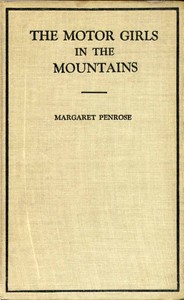
The Motor Girls in the Mountains; or, The Gypsy Girl's Secret — Themes and Context
(0 User reviews)
2878
Project Gutenberg
2012
Not confirmed
Girls -- Societies and clubs -- Juvenile fiction; Mystery and detective stories; Automobiles -- Juvenile fiction; Romanies -- Juvenile fiction
Readers of public-domain and historical texts
Project Gutenberg digital edition
en
Edition facts
Words
53,618
Reading time
234 min
Text sections
8
The Motor Girls in the Mountains; or, The Gypsy Girl's Secret — Themes and Context can be approached with a clearer sense of reading commitment from its source measurements: 53,618 words, 3 hr 54 min estimated reading time, and 8 detected text sections.
The text analysis averages about 14.1 words per sentence, while the detected sections provide another way to judge how the source is divided.
Project Gutenberg metadata also associates the work with “Girls -- Societies and clubs -- Juvenile fiction,” connecting these edition facts with the source record’s subject description.
Source:
Project Gutenberg record #39063
An editorial note on Margaret Penrose's 1919 adventure, focusing on the tension between the girls' spirited banter and the sudden wilderness danger, the contrasting portrayals of Bess's plumpness, and the shift from leisurely motoring to frantic search.
Editorial Edition Score
4.7/5
★★★★★
★★★★★
Calculated from edition completeness, EPUB availability, text structure and catalogue metadata. Not a user rating.
How this score is calculated
- Description quality20 pts
- Title & short description10 pts
- Source metadata20 pts
- Text length15 pts
- Chapters / structure15 pts
- EPUB file integrity20 pts
Total of 100 points, scaled to a 2.5-5.0 range. Editions with an empty description or a missing EPUB file are not scored.
Edition quality
Public-domain source text
Read the source text
The source text is kept in the dedicated reader, separate from this catalogue record and its commentary.
The Motor Girls in the Mountains opens with a burst of speed and a question that is really an exclamation: Cora Kimball, hand on the wheel, asks her friends if this isn't “the best thing ever.” The answer comes from Belle and Bess Robinson, who occupy the seat behind her, and the scene is one of sun-flecked roads, soft cushions, and the sheer delight of living. But the same chapter that begins with this carefree rush also introduces a missing purse and a group of vagabonds, hinting at the tensions that will soon pull the girls from the comfort of their automobile into the uncertainty of the wilderness.
Banter as a Marker of Character
The early dialogue between the Robinson twins reveals a great deal about their personalities and their relationship. Bess, the larger of the two, is sensitive about her “plumpness” and avoids the word “stout” as if it were the plague. Her sister Belle teases her about nibbling chocolate creams, and Bess defends herself by producing a box of lemon drops, insisting they don't make one plump. The exchange is light and affectionate, but it also establishes a pattern: Bess's physical self-consciousness is a recurring note, and the girls' banter serves as a way of negotiating their differences. Cora joins in, reaching over to pinch Bess when she asks to be pinched, and the moment is playful. Yet this same dynamic of teasing and sensitivity will later be set against the stark seriousness of a search party, when Bess and Belle's eyes are red and swollen with weeping. The contrast between the easy laughter of the opening and the later grief is sharp, and it is the banter that makes the later distress feel earned.
The Sudden Shift from Leisure to Peril
The narrative moves from the controlled environment of the motor car to the uncontrolled wilderness with startling speed. In the opening chapter, the girls are concerned with speed limits and chocolate creams; by the later excerpt, Cora has wandered off and is lost, and the boys are yelling until they are hoarse, covering as much territory as they can. The language shifts from the luxurious (“snuggled down still more luxuriously in the soft cushions”) to the urgent (“Work, fellows! Work like mad!”). The boys think of the “ugly monster” they saw in the road, and the fear that Cora may have been attacked by one of its tribe. The setting itself changes from a sun-flecked road to a wilderness where lumberjacks know the woods thoroughly and where a tyro faces real danger. This abrupt transition is not softened; the reader is carried along from the comfort of the automobile to the anxiety of the search without pause, and the contrast underscores how quickly the girls' world can be disrupted.
The Wilderness as a Testing Ground
The mountains in this story are not merely a backdrop; they are an active force that tests the characters. The backwoodsman Joel is described as knowing the dangers that threaten any tyro that ventures into that wilderness, and the search party must rely on his knowledge. The boys' plan to comb the woods all day and all night, and to telephone to neighboring towns and camps for volunteers, shows that the wilderness is vast and indifferent. The decision to tell Aunt Betty the truth, rather than spare her, is framed as a matter of fairness: “It would not be fair to her, in a matter of such moment, to treat her as a child.” This moment of adult judgment contrasts with the earlier playful tone, and it suggests that the wilderness forces the characters to grow up quickly. The excerpt ends with Aunt Betty's frightened exclamation and Walter's self-reproach, leaving the reader with the sense that the mountains have changed the stakes of the story entirely.
Readers who approach this book expecting a simple motoring adventure will find that the mountains introduce a different kind of journey. The early banter and the later desperation are two sides of the same coin: both are responses to the world the girls inhabit, a world where a moment of inattention can lead to a fall down a mountainside. Pay attention to the small details—the lemon drops, the soft cushions, the ugly monster in the road—because they are the threads that tie the story together.
I’ve always treasured that moment in The Motor Girls in the Mountains when the wild forest swallows their chatter, leaving only worry in the trees. It reminds me of another volume, gentler and sunlit, where a child’s quiet steps trace unfamiliar paths. Both speak of finding one’s footing when the map fails. Our Little Cuban Cousin — Reading Companion holds that same hush of discovery.
There are no reviews for this eBook.
There are no comments for this eBook.
Reader reflection
What did you think of this book?
Answer a few questions and save a private reflection on this device.
Your progress
0
/
10
2
What was your overall reaction to the book?
3
Is this a title you would suggest to others?
4
Did the language feel accessible?
5
How would you describe its reading pace?
6
Did the book meet your expectations?
7
What was the strongest part of the book?
8
Did you relate to its people, ideas, or situations?
9
In one sentence, what did you learn?
10