1

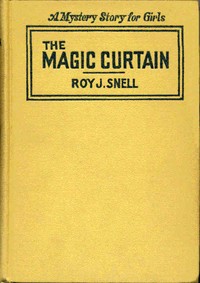
The Magic Curtain A Mystery Story for Girls — Text and Context
(0 User reviews)
203
Project Gutenberg
2013
Not confirmed
Mystery and detective stories; Thieves -- Juvenile fiction; Women detectives -- Juvenile fiction; Women dancers -- Juvenile fiction
Readers of public-domain and historical texts
Project Gutenberg digital edition
en
Edition facts
Words
50,608
Reading time
221 min
Text sections
8
Before opening The Magic Curtain A Mystery Story for Girls — Text and Context, the edition data offers a quick orientation: 50,608 words, 3 hr 41 min estimated reading time, and 8 detected text sections.
The text analysis averages about 11.4 words per sentence, while the detected sections provide another way to judge how the source is divided.
Project Gutenberg metadata also associates the work with “Mystery and detective stories,” connecting these edition facts with the source record’s subject description.
Source:
Project Gutenberg record #42137
Florence and Petite Jeanne investigate a face in the dark at the Civic Opera House, leading to a chain of thefts, a lost cameo, and a mysterious hunchback, with scenes shifting between grand halls and shadowy enclosures.
Editorial Edition Score
4.7/5
★★★★★
★★★★★
Calculated from edition completeness, EPUB availability, text structure and catalogue metadata. Not a user rating.
How this score is calculated
- Description quality20 pts
- Title & short description10 pts
- Source metadata20 pts
- Text length15 pts
- Chapters / structure15 pts
- EPUB file integrity20 pts
Total of 100 points, scaled to a 2.5-5.0 range. Editions with an empty description or a missing EPUB file are not scored.
Edition quality
Public-domain source text
Read the source text
The source text is kept in the dedicated reader, separate from this catalogue record and its commentary.
The story opens at one o'clock in the morning in the vast, silent auditorium of the Civic Opera House, where a face appears in the dark—a golden-haired youth in a dress suit named Pierre Andrews. This atmospheric beginning sets a pattern of movement between grand public spaces and hidden corners, as the narrative shifts from the opera house to a stormy night at a Jubilee, where Florence and Petite Jeanne stumble upon a hunchback and a boy dividing loot from a sack of purses. The discovery of a lost cameo belonging to a little old lady triggers a series of events that blend mystery with theatrical settings.
From Opera House to Enclosure
The narrative moves fluidly between contrasting spaces: the opera house's "well of darkness and silence" and the enclosed, storm-lashed area where the girls spy on the crouching figures. The opening chapter establishes a sense of hidden observation—the reader is positioned as if seated in a box, catching faint sounds and a vague white spot that resolves into a face. Later, the enclosure becomes a stage for confrontation, with the rattle of chains and a man scaling palisades. This structural pattern of moving from vast, empty halls to cramped, secretive spots recurs throughout the excerpts, emphasizing a world where secrets are both performed and concealed.
Recurring Images of Light and Shadow
Light sources are carefully placed: the faint light that reveals only a face, the gleam of a star on an officer's coat, the lamp lit in a small office-like room. Darkness is described as "only a little less than absolute darkness," and characters are often seen as silhouettes or spots of white. The hunchback and boy are first perceived as crouching shapes, their actions illuminated by a single light. This recurring imagery reinforces the theme of partial visibility—truth emerges in fragments, much like the lost cameo that appears suddenly from a purse. The contrast between the opera's bright stage and the dark backstage areas mirrors the gap between appearance and reality.
Voice and Dialogue as Clues
The dialogue carries distinct voices: the hunchback's grumbling defiance ("we hain't no thieves"), the boy's ragged excuse ("we was down to the Jubilee"), and the officer's stern practicality. Florence's exclamations ("The cameo! The lost cameo!") reveal her quick associative thinking. The officer's speech about the picture of an old lady ("somebody's mother, like as not") shifts the moral frame from theft to sentimental loss. These vocal contrasts—between the theatrical French accent of Pierre Andrews and the colloquial speech of the foundlings—create a layered soundscape that hints at social divisions and hidden histories.
Movement Between Scenes
The story progresses through a series of abrupt scene changes: from the opera house to the Jubilee crowd, to the enclosure, to the office. Each shift is marked by a sensory cue—the rustle of a curtain, the rattle of chains, the gruff voice of the officer. The girls are often in motion, pleading or breathless, while the hunchback and boy are caught in a static tableau of sorting loot. This dynamic of pursuit and discovery drives the narrative forward, with the cameo acting as a tangible link between disparate locations. The structure suggests that resolution will come not through a single revelation but through the accumulation of such fragmented encounters.
Readers attentive to the interplay of setting and voice will find that the mystery unfolds less through plot twists than through the careful arrangement of spaces and the contrasts between characters' speech. The cameo, the purses, and the face in the dark are not merely clues but objects that carry emotional weight. Approach the story as a series of theatrical scenes, each with its own lighting and dialogue, and the larger pattern of hidden connections will emerge naturally.
Rain slid down the window that afternoon as I finished The Magic Curtain, lingering on Petite Jeanne’s quiet courage in those shadowy enclosures. The hunchback’s hidden kindness stayed with me, a warmth against the gray light. That feeling—of secrets held gently—led me almost by accident to The Vee-Boers: A Tale of Adventure in Southern Africa — Themes and Context, where a different landscape holds its own quiet bonds.
There are no reviews for this eBook.
There are no comments for this eBook.
Reader reflection
What did you think of this book?
Answer a few questions and save a private reflection on this device.
Your progress
0
/
10
2
How much did you enjoy the reading experience?
3
How likely are you to recommend this book?
4
How much effort did this book require?
5
Did anything about the book feel genuinely new?
6
How strong was your personal connection to the text?
7
How did the pace of the book feel?
8
Did you gain anything practical from the text?
9
What did this book teach you most?
10