1

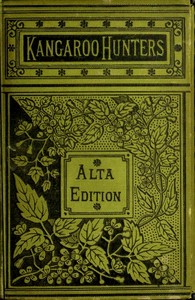
The Kangaroo Hunters; Or, Adventures in the Bush — Edition Insights
(0 User reviews)
186
Project Gutenberg
2013
Not confirmed
Animals -- Juvenile fiction; Siblings -- Juvenile fiction; Voyages and travels -- Juvenile fiction; Natural history -- Juvenile fiction; Survival skills -- Juvenile fiction; Kangaroos -- Juvenile fiction; Shipwrecks -- Juvenile fiction; Frontier and pioneer life -- Juvenile fiction; Prisoners -- Juvenile fiction; Australia -- Description and travel -- Juvenile fiction
Readers of public-domain and historical texts
Project Gutenberg digital edition
en
Edition facts
Words
135,879
Reading time
591 min
Text sections
13
The Kangaroo Hunters; Or, Adventures in the Bush — Edition Insights can be approached with a clearer sense of reading commitment from its source measurements: 135,879 words, 9 hr 51 min estimated reading time, and 13 detected text sections.
The text analysis averages about 22.3 words per sentence, while the detected sections provide another way to judge how the source is divided.
Project Gutenberg metadata also associates the work with “Animals -- Juvenile fiction,” connecting these edition facts with the source record’s subject description.
Source:
Project Gutenberg record #43465
Anne Bowman's 1858 adventure follows the Mayburn family and orphans through Australian bush, combining survival challenges with natural history observations. The narrative contrasts settler perspectives with Indigenous knowledge, as seen in Baldabella's warnings and the boys' explorations.
Editorial Edition Score
4.8/5
★★★★★
★★★★★
Calculated from edition completeness, EPUB availability, text structure and catalogue metadata. Not a user rating.
How this score is calculated
- Description quality20 pts
- Title & short description10 pts
- Source metadata20 pts
- Text length15 pts
- Chapters / structure15 pts
- EPUB file integrity20 pts
Total of 100 points, scaled to a 2.5-5.0 range. Editions with an empty description or a missing EPUB file are not scored.
Edition quality
Public-domain source text
Read the source text
The source text is kept in the dedicated reader, separate from this catalogue record and its commentary.
Anne Bowman's The Kangaroo Hunters (1858) opens with a preface that explicitly frames the book as a blend of romance and truth, aiming to describe 'the marvellous works of creation' while avoiding the corruption of taste. The story follows the Mayburn family and two orphans, Ruth and Jack, after a shipwreck strands them in the Australian bush. Bowman's narrative voice frequently shifts between detailed natural description—kangaroos, emus, and the 'gloomy subterranean passage' through a mountain—and the practical concerns of survival: finding water, conserving gunpowder, and cutting staircases into cliffs. The excerpts reveal a tension between the characters' European expectations and the unfamiliar landscape, with the native woman Baldabella serving as a cultural interpreter, warning of 'bad black fellows' and cannibalism, though Mr. Mayburn doubts its existence.
The Orphans and the Expedition
The opening chapters introduce the Mayburn household and the addition of two orphans, Ruth and Jack. Ruth is labeled 'the Unlucky' by the community, a designation that shapes her early role in the narrative. Jack proposes a project that leads the family to embark on a voyage to India, but the shipwreck redirects their journey to Australia. The excerpts show that the orphans are not merely passive passengers; Jack's initiative and Ruth's fears (she is 'with much difficulty restrained' from crying out at the threat of being eaten) drive key moments. Bowman uses the orphans to inject vulnerability and resourcefulness into the group dynamic, contrasting with the more authoritative figures like Mr. Mayburn and the soldier Gerald.
Landscape as Obstacle and Revelation
The Australian bush is portrayed as both a physical barrier and a source of wonder. The boys' exploration of a 'gloomy subterranean passage' and a 'narrow gully' choked with stones exemplifies the constant negotiation with terrain. Bowman's descriptions emphasize the labor of movement: 'Axes and ropes were put in requisition' for descents, and Jack must 'cut a staircase' to access new plains. The landscape is also a site of discovery—a herd of kangaroos 'disturbed by strange voices' appears, and Gerald spots an emu, recalling a zoo specimen. Yet the same terrain exposes the party to danger, as the cries of 'savages' approach, forcing the group to seal their cave entrance with a rock. The tension between the promise of open plains and the threat of exposure is a recurring pattern.
Cultural Encounters and Survival Knowledge
Baldabella, a native woman who learns English, becomes a crucial intermediary. Her warning—'Many bad black fellows! much bad! see white man foot-walk'—introduces a note of menace, but her practical skills also aid survival: she fishes and interprets the landscape. Mr. Mayburn's skepticism about Australian cannibalism ('doubted and disputed the existence') highlights a clash between European rationalism and Indigenous realities. The excerpts do not resolve this tension, but they show Baldabella's knowledge as both feared and relied upon. Wilkins and Jack, the more pragmatic characters, heed her warnings, while the family's survival depends on blending their own tools (axes, ropes, guns) with her local expertise. This dynamic reflects Bowman's broader interest in the interplay between civilization and wilderness.
Readers attentive to the interplay of voices will notice how Bowman uses dialogue to differentiate characters: Gerald's enthusiasm, Arthur's caution over his 'four left' charges, and Jenny's pragmatic worry about food and water. The excerpts offer only fragments of the full 135,879-word narrative, but they suggest a story where survival depends on negotiating not just the physical environment, but also the competing perspectives within the party. The kangaroo hunters of the title are never far from the anxieties of being hunted themselves.
That old bush tale left me thinking about how differently people read the same wild land—some see danger, others see home. Harry Skipwith’s journey carries a similar quiet weight, those slow moments between peril when a place starts feeling familiar. The Perils and Adventures of Harry Skipwith by Land and Sea — Key Ideas to Explore reminded me of that feeling, like a map you keep unfolding long after the trip ends.
There are no reviews for this eBook.
There are no comments for this eBook.
Reader reflection
How will you remember this book?
Save your reaction, strongest insight, and memorable passage.
Your progress
0
/
10
2
Was reading this book enjoyable?
3
Would you encourage someone else to read it?
4
Did the language feel accessible?
5
Could you follow the author’s main argument?
6
How useful did the reading feel?
7
Did anything about the book feel genuinely new?
8
How well did it match your expectations?
9
What changed or sharpened your thinking?
10