1

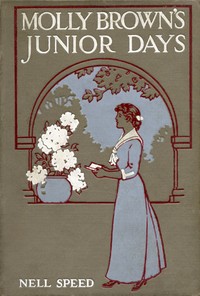
Molly Brown's Junior Days — Context and Discussion
(0 User reviews)
1248
Project Gutenberg
2011
Not confirmed
College students -- Juvenile fiction; College stories; Young women -- Social life and customs -- Juvenile fiction; Tricks -- Juvenile fiction; Japanese -- United States -- Juvenile fiction; Social values -- Juvenile fiction
Readers of public-domain and historical texts
Project Gutenberg digital edition
en
Edition facts
Words
52,056
Reading time
227 min
Text sections
6
This digital edition of Molly Brown's Junior Days — Context and Discussion is described by source-level measurements including 52,056 words, 3 hr 47 min estimated reading time, and 6 detected text sections.
The text analysis averages about 14.1 words per sentence, while the detected sections provide another way to judge how the source is divided.
Project Gutenberg metadata also associates the work with “College students -- Juvenile fiction,” connecting these edition facts with the source record’s subject description.
Source:
Project Gutenberg record #36717
Nell Speed's third Molly Brown novel follows the junior class at Wellington College through theft, society elections, and a broken china pig bank, with dialogue and description revealing character through precise, period-appropriate diction.
Editorial Edition Score
4.7/5
★★★★★
★★★★★
Calculated from edition completeness, EPUB availability, text structure and catalogue metadata. Not a user rating.
How this score is calculated
- Description quality20 pts
- Title & short description10 pts
- Source metadata20 pts
- Text length15 pts
- Chapters / structure15 pts
- EPUB file integrity20 pts
Total of 100 points, scaled to a 2.5-5.0 range. Editions with an empty description or a missing EPUB file are not scored.
Edition quality
Public-domain source text
Read the source text
The source text is kept in the dedicated reader, separate from this catalogue record and its commentary.
The opening of Molly Brown's Junior Days immediately establishes a voice that blends colloquial energy with formal college life. Nance Oldham, alone amid a mountain of luggage, declares she feels 'cast up by an earthquake with a lot of other miscellaneous things'—a simile that is both vivid and self-deprecating, typical of Speed's character-revealing dialogue. The narrative quickly shifts to Nance's internal conflict: she resists visiting Mrs. McLean because 'Andy's there to-day,' a thought that makes her blush. This small moment, rendered in free indirect style, shows Speed using interior reactions to sketch romantic interest without explicit statement.
Diction and the Social Code
Speed's word choices mark social boundaries and moral judgments with precision. When the theft is discovered, Molly's 'soul revolting in disgust at anything dishonest' uses the formal 'revolting' to signal her upright character, while Katherine calls the act 'a low, miserable trick'—colloquial but forceful. The narrator describes the thief as a 'dastardly' act, a slightly archaic term that suits the collegiate setting. The girls' reactions are differentiated: Jessie admits her own carelessness, Judy flushes when mentioning the night of the play, and Molly tries to 'laugh away her disappointment.' Each verb and adjective aligns with the speaker's personality, from Nance's 'New England determination' to Judy's 'gay and laughing exterior.'
Objects as Evidence and Character
Material objects drive the plot and reveal character. The china pig bank named 'Martin Luther' is not just a container but a token of Molly's thrift and humor. The theft is solved by reasoning about the pig's duplicate and the availability of stage money—a detail that shows the girls' practical intelligence. Similarly, missing items like Judy's gold beads and Jessie's five dollars are catalogued with the specificity of a police report. Speed uses these objects to ground the mystery in the tangible world of college life: a dressing table, a gym window sill, a store shelf. The broken pig becomes a symbol of violated trust, and Molly's decision to 'mend up one of last year's dresses' rather than buy new clothes underscores her resilience.
Voice and Social Hierarchy in Society Elections
The chapter on society elections reveals Speed's ear for social nuance through dialogue and narration. The Shakespearean Society's solemn presentation of a scroll and pin is described with mock-formal precision: 'They then solemnly shook hands and marched out in good order.' The contrast between this ceremony and the casual naming of other societies—'Olla Podridas, which, as all Wellington knows, is Spanish for mixed soup'—shows the narrator's wry awareness of college hierarchies. Judy's feelings about not being elected to the Shakespeareans are 'carefully kept hidden under her gay and laughing exterior,' a phrase that uses the exterior/interior dichotomy to hint at unspoken social pain. The narrator's aside, 'as all Wellington knows,' creates an in-group tone that aligns the reader with the knowledgeable students.
Structure of Suspicion and Revelation
Speed builds suspense through a sequence of small discoveries and delayed reactions. The theft is uncovered during a 'jolly hickory-nut cake party,' a domestic setting that contrasts with the crime. The girls' discussion moves from outrage to methodical deduction: 'Who else has missed things?' Margaret asks, prompting a cascade of confessions. The housekeeper is notified 'next morning,' and the rumor spreads that 'somewhere about college there dwelt a thief,' described as 'a kind of evil spirit lurking in the shadows.' This gothic language, applied to a mundane theft, heightens the emotional stakes. The chapter ends with a forward-looking statement—'Several things of importance to this history happened during the week before the house party at Exmoor'—that uses the formal 'this history' to frame the narrative as a chronicle, not just a story.
Speed's prose rewards attention to its small, precise choices: a blush that signals a crush, a piggy bank that becomes a clue, a society pin that marks belonging. Readers attuned to the diction will find a world where moral character is revealed through word choice and object handling. The excerpts offer a focused view of Speed's method; the full novel likely extends these patterns across the junior year's adventures.
I found myself thinking about the china pig bank in Molly Brown’s junior year, how its broken pieces revealed hidden loyalties. That quiet attention to small things—the way a gift or a gesture carries weight—reminded me of another story’s warmth, the one where a Christmas ship travels against the cold. Ethel Morton and the Christmas Ship — Edition Insights holds that same gentle care for detail, a memory of generosity I’m glad to revisit.
There are no reviews for this eBook.
There are no comments for this eBook.
Reader reflection
Record your reading impressions
A brief reflection can help important ideas stay with you longer.
Your progress
0
/
10
2
How much did you enjoy the reading experience?
3
Would you encourage someone else to read it?
4
How demanding did the text feel?
5
Did the book deliver what you hoped for?
6
How would you rate its originality?
7
Did this book create an emotional response?
8
Would you start a conversation about this book?
9
What changed or sharpened your thinking?
10