1

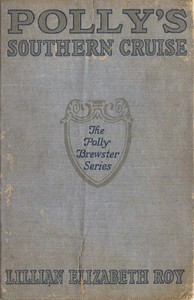
Polly's Southern Cruise — Text and Context
(0 User reviews)
1272
Project Gutenberg
2013
Not confirmed
Sea stories; Adventure stories; Ocean travel -- Juvenile fiction; Young women -- Social life and customs -- Juvenile fiction; Caribbean Area -- Description and travel -- Juvenile fiction; Florida -- Description and travel -- Juvenile fiction; Cuba -- Description and travel -- Juvenile fiction; Panama -- Description and travel -- Juvenile fiction
Readers of public-domain and historical texts
Project Gutenberg digital edition
en
Edition facts
Words
59,457
Reading time
259 min
Text sections
15
The source record for Polly's Southern Cruise — Text and Context measures this digital text at 59,457 words, 4 hr 19 min estimated reading time, and 15 detected text sections.
The text analysis averages about 18.5 words per sentence, while the detected sections provide another way to judge how the source is divided.
Project Gutenberg metadata also associates the work with “Sea stories,” connecting these edition facts with the source record’s subject description.
Source:
Project Gutenberg record #42934
This editorial note examines the structure and recurring imagery in Lillian Elizabeth Roy's 1923 novel, focusing on how the narrative alternates between planning scenes and travel episodes, and how movement through Caribbean landscapes is punctuated by negotiations with local vendors and drivers.
Editorial Edition Score
4.8/5
★★★★★
★★★★★
Calculated from edition completeness, EPUB availability, text structure and catalogue metadata. Not a user rating.
How this score is calculated
- Description quality20 pts
- Title & short description10 pts
- Source metadata20 pts
- Text length15 pts
- Chapters / structure15 pts
- EPUB file integrity20 pts
Total of 100 points, scaled to a 2.5-5.0 range. Editions with an empty description or a missing EPUB file are not scored.
Edition quality
Public-domain source text
Read the source text
The source text is kept in the dedicated reader, separate from this catalogue record and its commentary.
From its opening chapter, Polly’s Southern Cruise establishes a rhythm of deliberation and departure. The first scene shows Polly Brewster and Eleanor Maynard bent over a table covered with papers, finalizing an itinerary that will take them from Florida to Cuba, Jamaica, and Panama. The narrative then shifts abruptly to the moment of embarkation, a pattern that recurs throughout the book: each new destination is preceded by a brief planning discussion, followed by a swift transition to travel. This structural repetition gives the novel a procedural quality, as if the journey itself is a series of logistical problems to be solved.
Planning as Performance
The novel’s first chapter is almost entirely given over to conversation about the trip. Polly and Eleanor debate the merits of sailing with Mr. Dalken versus Mrs. Courtney, tear up discarded sheets of paper, and finally decide to present their “perfected plans” to the group. This emphasis on planning is not merely expository; it establishes the characters’ agency and their delight in arranging details. Later chapters echo this pattern: before visiting the Havana race course, the party discusses how to handle drivers and vendors; before exploring Kingston, they consult maps. The planning scenes function as miniature rehearsals, allowing the characters to anticipate obstacles and assert control over their environment.
The Texture of Transit
Roy’s descriptions of travel are dense with sensory detail and small frictions. In the excerpt from the Havana visit, the carriage ride to the race course is rendered as a sequence of discomforts: bamboo avenues, banana plantations, forded streams where wheels sink into sand, and “choking clouds of dust” settling on passengers. The narrative lingers on the negotiation with the driver—Jack refuses to pay until the end, while Mr. Dalken pays immediately to avoid a policeman. This contrast in handling local transactions recurs throughout the novel, highlighting different attitudes toward travel and authority. The movement between scenes is often punctuated by such exchanges, making the journey feel negotiated rather than smooth.
Vendors, Touts, and the Crowded Threshold
Arrival at a new location frequently involves a gauntlet of vendors and touts. At the Havana race course, the party is besieged by a vendor of cocoanut juice, a bookmaker, a three-card monte gambler, and “every sort of vendor of anything salable.” The narrative catalogs these figures with a mixture of amusement and exasperation, and the group must physically push through to reach the entrance gate. This pattern—arrival, negotiation, penetration—gives each destination a threshold that must be crossed. The crowding of vendors also serves as a local color device, marking the foreignness of each setting while reinforcing the group’s status as outsiders who must navigate unfamiliar social codes.
The Grand Stand as Set Piece
Once inside the race course, the narrative shifts to a tableau: the Grand Stand “painted white and decked in many-hued flags,” filled with army officers, professional men, and fashionably dressed women with fans and parasols. This set piece contrasts sharply with the dusty, chaotic approach. The horses are paraded past, and Polly expresses a wish to bet, leading to a brief exchange about the horse “Will o’ the Wisp.” The scene is static after the movement of the carriage ride, and the focus returns to the group’s internal dynamics. This alternation between kinetic travel and static observation is a recurring structural feature: the journey provides momentum, while the destinations offer moments of pause and social display.
Readers attentive to structure will notice how Roy uses planning scenes, transit sequences, and arrival tableaux to shape the narrative. The novel’s interest lies less in plot than in the texture of travel itself—the negotiations, the discomforts, the brief spectacles. The excerpts suggest that the journey is as much about managing people and logistics as about sightseeing. Approaching the book as a series of episodes linked by movement rather than by a single arc may yield a more satisfying reading experience.
There are no reviews for this eBook.
There are no comments for this eBook.
Reader reflection
Your personal reading reflection
Build a private reading journal entry for this title.
Your progress
0
/
10
2
Was reading this book enjoyable?
3
Would you pass this book on to a friend?
4
Did the language feel accessible?
5
How understandable was the text?
6
What did you appreciate most?
7
Did you gain anything practical from the text?
8
How closely did the book connect with your experience?
9
What changed or sharpened your thinking?
10