About 188 minutes
The Boys of the Wireless; Or, A Stirring Rescue from the Deep — Text and Context
Childrens Adventures
43,055 recorded words. 1 minutes difference from this book's estimate.
View Gutenberg source #35044
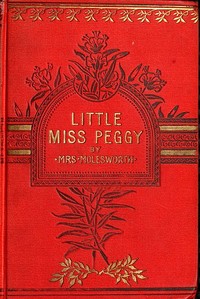
This digital edition of Little Miss Peggy: Only a Nursery Story — Inside the Classic is described by source-level measurements including 43,436 words, 3 hr 9 min estimated reading time, and 6 detected text sections.
The text analysis averages about 16.2 words per sentence, while the detected sections provide another way to judge how the source is divided.
Project Gutenberg metadata also associates the work with “Christian life -- Juvenile fiction,” connecting these edition facts with the source record’s subject description.
Explore this collection
These alternatives are selected using recorded categories and estimated reading time.
About 188 minutes
Childrens Adventures
43,055 recorded words. 1 minutes difference from this book's estimate.
View Gutenberg source #35044About 188 minutes
Childrens Adventures
43,165 recorded words. 1 minutes difference from this book's estimate.
View Gutenberg source #35083About 190 minutes
Childrens Adventures
43,487 recorded words. 1 minutes difference from this book's estimate.
View Gutenberg source #43595Search stored excerpts and compare books → Choose by your preferences →
Choices use stored catalog measurements. Estimates vary with reading speed. A shared category is a catalog label, not a claim that two books have the same argument or literary quality.
Search reads excerpt text stored with this catalog and links to its associated Gutenberg record. The connection is stored in the site database; this tool does not recheck that every excerpt is word-for-word identical to that external record. Excerpt search does not cover every chapter and does not verify historical publication dates.
Catalog snapshot checked: 2026-09-25. Coverage: 98 public books, 98 available source excerpts.
Calculated from edition completeness, EPUB availability, text structure and catalogue metadata. Not a user rating.
Total of 100 points, scaled to a 2.5-5.0 range. Editions with an empty description or a missing EPUB file are not scored.
Public-domain source text
The source text is kept in the dedicated reader, separate from this catalogue record and its commentary.
Mrs. Molesworth's Little Miss Peggy: Only a Nursery Story (1887) opens with Peggy at a breakfast table, sighing because clouds hide a distant white spot on a hill she likes to watch. The scene immediately establishes her as a child absorbed in private fancies—a trait the narrator treats with gentle seriousness. The catalog subjects list Christian life, conduct, obedience, and family, but the excerpts show these themes emerging not through overt moralizing but through small, concrete incidents: Peggy's anxiety over a baker's dozen of buns, her impulse to give the extra bun to a neighbor girl, and her careful negotiations with siblings. Walter Crane's illustrations, including a frontispiece of Peggy with a lady, reinforce the story's focus on everyday moments rather than dramatic events.
The white spot on the hill is a recurring image in the early chapters. Peggy speaks of it in babyish language—"neely in the sky"—and feels thwarted when clouds hide it. This detail is not merely decorative; it signals that the story takes her perceptions seriously. The narrator does not mock her mispronunciations or her belief that the spot is a little white house. Instead, the text preserves her voice, as when she says "the naughty clouds has covered it up." This fidelity to a child's idiom is a hallmark of Molesworth's approach. The white spot also connects to the theme of longing and imagination, which the catalog subjects do not explicitly list. Peggy's desire to know "what the little white house is reely like" suggests a curiosity that drives her actions, though the excerpts do not reveal whether she ever reaches it.
One of the most fully rendered episodes in the excerpts involves Peggy's distress over receiving seven buns instead of six. She worries the shop gave one too many and wonders if they must return it. The young dressmaker Miss Earnshaw explains the baker's dozen, but Peggy remains uneasy: "It isn't comfable," she says, wriggling. This moment is a precise example of how the book handles conduct. The catalog subject "Obedience" might suggest a top-down lesson, but here Peggy's conscience is self-directed. She resolves the discomfort by giving the extra bun to Brown Smiley, a girl from a poorer family. The act is not framed as charity but as a practical solution to a personal scruple. The text notes that Peggy runs across the street "breathlessly," and Brown Smiley's grateful response—"You are kind, to be sure"—is understated. The episode avoids sentimentality, focusing instead on Peggy's internal logic.
The excerpts depict a structured nursery world with clear roles. Peggy is the middle child, between older brothers Thorold and Terence and the baby. Her brother Baldwin, described as speaking "in his slow, distinct way," volunteers to stay home with her, calling himself "one of the little ones." This self-classification hints at a hierarchy based on age and capability. Nurse presides over meals, enforcing grace and order. The catalog subject "Siblings" is thus realized through small negotiations: Peggy plans to ask papa for pennies because Baldwin is being good. The baby, meanwhile, drums with a spoon and requires a "great deal of room to himself." These details build a domestic ecosystem where children jostle for attention and negotiate favors. The excerpts do not show parental figures directly, but the children's references to papa and nurse indicate a world where adults are distant authorities whose approval matters.
Readers approaching Little Miss Peggy will find a story that rewards attention to small gestures and repeated motifs. The white spot on the hill, the extra bun, and the red shoes (mentioned in chapter titles) are not symbols but actual objects that carry emotional weight for Peggy. Molesworth's prose moves at a child's pace, lingering on feelings of unease or satisfaction. The catalog subjects provide a framework, but the excerpts suggest the book is less about teaching lessons than about observing how a child learns to navigate her own conscience.
Peggy’s quiet world, with its gentle lessons tucked into playtime, always reminds me of another girl’s journey. There is a particular kinship between her nursery and the wider fields of Blue Robin, the Girl Pioneer — Edition Insights, both rooted in the soft courage of childhood. I have shelved them near each other for years, and they seem to murmur together.
Use these questions to collect your thoughts before moving on.