1

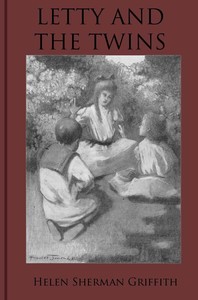
Letty and the Twins — Key Ideas to Explore
(0 User reviews)
349
Project Gutenberg
2012
Not confirmed
Twins -- Juvenile fiction; Friendship -- Juvenile fiction; Farm life -- Juvenile fiction; Circus -- Juvenile fiction
Readers of public-domain and historical texts
Project Gutenberg digital edition
en
Edition facts
Words
57,973
Reading time
253 min
Text sections
6
Before opening Letty and the Twins — Key Ideas to Explore, the edition data offers a quick orientation: 57,973 words, 4 hr 13 min estimated reading time, and 6 detected text sections.
The text analysis averages about 15.1 words per sentence, while the detected sections provide another way to judge how the source is divided.
Project Gutenberg metadata also associates the work with “Twins -- Juvenile fiction,” connecting these edition facts with the source record’s subject description.
Source:
Project Gutenberg record #41356
This editorial note examines how the catalog subjects of twins, friendship, farm life, and circus relate to the actual text of Helen Sherman Griffith's 1910 children's novel, focusing on the twins' distinct voices, the farm setting's role, and the circus's limited presence.
Editorial Edition Score
4.7/5
★★★★★
★★★★★
Calculated from edition completeness, EPUB availability, text structure and catalogue metadata. Not a user rating.
How this score is calculated
- Description quality20 pts
- Title & short description10 pts
- Source metadata20 pts
- Text length15 pts
- Chapters / structure15 pts
- EPUB file integrity20 pts
Total of 100 points, scaled to a 2.5-5.0 range. Editions with an empty description or a missing EPUB file are not scored.
Edition quality
Public-domain source text
Read the source text
The source text is kept in the dedicated reader, separate from this catalogue record and its commentary.
The catalog subjects for Letty and the Twins list twins, friendship, farm life, and circus. The excerpts, however, show that the circus appears only in the introduction, which summarizes the prior book Letty of the Circus. In the present story, the circus is absent from the action; the twins, Jane and Christopher, arrive at a farm and engage in everyday activities like tea parties and planning picnics. The catalog subjects thus reflect the series arc rather than the content of this volume alone.
Twin Voices and Distinct Personalities
The catalog subject “Twins” suggests a pair acting in unison, but the excerpts reveal distinct personalities. Jane is described as having a “rosy, chubby face” and speaking with admiration: “Oh, Kit, isn't it just fun!” Christopher, called Kit, is more adventurous and boastful, declaring he would like to go “about sixty miles an hour.” The narrator notes that “the stern fact that Christopher was a boy and Jane a girl was just beginning faintly to dawn upon them,” shown by Jane's admiration and Christopher's “occasional condescension.” This differentiation is reinforced in later scenes, where Christopher plans a secret swimming trip with a boy named Billy, while Jane is associated with dolls and tea parties. The twins share experiences but are not interchangeable.
Farm Life as a Setting for Social Dynamics
The catalog subject “Farm life” might imply agricultural labor or rural routines. In the excerpts, the farm serves primarily as a backdrop for the twins' social interactions. They arrive by train, stay with grandparents, and engage in leisure: a tea party with cakes and lemonade, storytelling under a tree, and plans for a picnic in the woods. Christopher negotiates with his grandfather for a horse and wagon, but the focus is on his friendship with Billy, not on chores. The farm provides space for the children to explore independence, as when Christopher considers whether to tell his grandfather about swimming lessons. The setting enables the friendship plot rather than depicting farm work.
Friendship and the Absence of the Circus
The catalog includes both “Friendship” and “Circus,” but the excerpts show friendship as central and the circus as a backstory. The introduction explains that Letty Grey, a former circus performer, saved the twins from a bear in the earlier book. In this volume, Letty appears as a storyteller who sings and invents tales about “people or fairies who sing beautifully.” The circus is not depicted; instead, the narrative focuses on the twins' developing friendships with each other and with local children like Billy. Christopher's desire to be seen as “manly” drives his secret swimming plan, while Jane's admiration reinforces their bond. The circus subject thus refers to Letty's past, not the plot of this book.
Readers approaching Letty and the Twins based on its catalog subjects should expect a story centered on the twins' distinct voices and their farm-based adventures, with the circus serving as a premise rather than a setting. The excerpts suggest a gentle narrative of childhood social dynamics, where friendship is negotiated through everyday events like tea parties and secret plans. The book is part of a series, and its full context may require familiarity with earlier volumes.
I’ve long treasured the way Letty and the Twins finds kinship in shared quiet—the hush between chores, a circus’s brief glitter. It reminds me of another secret kept close, where friendship shields a heart’s burden. Side by side on my shelf, they whisper of loyalties that ask no applause. Here’s that companion: Dorothy Dale's Great Secret — Inside the Classic.
There are no reviews for this eBook.
There are no comments for this eBook.
Reader reflection
How will you remember this book?
Save your reaction, strongest insight, and memorable passage.
Your progress
0
/
10
2
How did the book work for you overall?
3
Would you encourage someone else to read it?
4
How much effort did this book require?
5
Did the story or argument move comfortably?
6
What was the strongest part of the book?
7
Would you start a conversation about this book?
8
Did anything about the book feel genuinely new?
9
Which lesson or insight stayed with you?
10