1

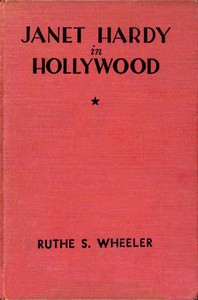
Janet Hardy in Hollywood — Context and Discussion
(0 User reviews)
239
Project Gutenberg
2013
Not confirmed
Adventure stories; Mystery and detective stories; Motion picture industry -- Juvenile fiction; Ambition -- Juvenile fiction; Actresses -- Juvenile fiction; Hollywood (Los Angeles, Calif.) -- Juvenile fiction; Women in the theater -- Juvenile fiction
Readers of public-domain and historical texts
Project Gutenberg digital edition
en
Edition facts
Words
47,341
Reading time
206 min
Text sections
7
The catalog record for Janet Hardy in Hollywood — Context and Discussion provides practical reading context through 47,341 words, 3 hr 26 min estimated reading time, and 7 detected text sections.
The text analysis averages about 14.9 words per sentence, while the detected sections provide another way to judge how the source is divided.
Project Gutenberg metadata also associates the work with “Adventure stories,” connecting these edition facts with the source record’s subject description.
Source:
Project Gutenberg record #42069
An editorial note examining how the catalog subjects of ambition, actresses, and Hollywood relate to the actual text of Ruthe S. Wheeler's 1935 novel, which opens in a Midwestern winter and focuses on small-town high school drama rather than the film industry.
Editorial Edition Score
4.7/5
★★★★★
★★★★★
Calculated from edition completeness, EPUB availability, text structure and catalogue metadata. Not a user rating.
How this score is calculated
- Description quality20 pts
- Title & short description10 pts
- Source metadata20 pts
- Text length15 pts
- Chapters / structure15 pts
- EPUB file integrity20 pts
Total of 100 points, scaled to a 2.5-5.0 range. Editions with an empty description or a missing EPUB file are not scored.
Edition quality
Public-domain source text
Read the source text
The source text is kept in the dedicated reader, separate from this catalogue record and its commentary.
The catalog subjects for Janet Hardy in Hollywood list ambition, actresses, and the motion picture industry, yet the opening chapters unfold in Clarion, a snowbound Midwestern town. The first scene shows Janet hurrying to school, a blond curl under a scarlet beret, preoccupied with tryouts for the class play. The Hollywood of the title remains a distant promise, not a present setting. This gap between subject tags and actual content invites a careful reading: the novel may be less about the film industry than about the journey toward it, grounded in the ordinary routines of high school journalism and amateur theater.
Small-Town Foundations
The excerpts devote considerable space to establishing Janet’s life in Clarion. She is editor of “The Weekly Clarion,” a page in the local Times, and her friend Helen Thorne worries about getting a part in the class play. The narrative lingers on a fishing trip with their fathers, where the men discuss work and relaxation while the girls prepare a fire. The dialogue is unhurried: “What a life this would be—no strain, no thoughts of tomorrow,” says Helen’s father. This domestic scene, complete with bullheads cooked on a spit, suggests that the novel’s emotional center lies in community and friendship, not in Hollywood glamour. The catalog subject “Motion picture industry -- Juvenile fiction” is thus only partially accurate; the industry is a future destination, not the immediate focus.
Ambition as a Secondary Theme
Ambition appears in the catalog, but the excerpts show it as muted and secondary. Janet says, “I won’t be heart-broken if I don’t get a part,” while Helen admits she would be “pretty much disappointed.” The fathers’ conversation on the creek bank reveals that Henry Thorne works in the film industry—he mentions “temperamental stars” and “stories to doctor”—but he is on a visit home, not actively pursuing Hollywood. His daughter Helen wants his pride, not a career. The ambition here is familial and modest, not the driving force the subject tag implies. Readers expecting a relentless pursuit of stardom will find instead a measured, realistic portrayal of teenage hopes.
The Hollywood Promise
The title and catalog promise Hollywood, but the excerpts only hint at it. Henry Thorne’s profession and the chapter titles—such as “Hollywood Bound” and “Screen Tests”—suggest that the setting will shift later, but the provided text does not reach that point. The novel’s structure appears to delay the Hollywood arrival, building a foundation in Clarion first. This editorial note cannot confirm how the film industry is portrayed, but the early chapters emphasize normalcy over spectacle. The catalog subject “Actresses -- Juvenile fiction” may apply to later events, but in the excerpts, acting is a school activity, not a profession. Readers should approach the book as a gradual transition from small-town life to a larger world, not as an immediate immersion in Hollywood.
Voice and Period Detail
The prose is direct and period-specific. Winter “hung on grimly,” and the high school is a “sprawling brick structure” built in 1898. The dialogue uses phrases like “Slow up a minute” and “That’s easy to say,” reflecting 1930s American speech. The fishing scene includes practical details: “Cut a willow stick for a stringer,” and the men clean fish while girls gather sticks. These concrete observations ground the story in a specific time and place, reinforcing that the novel is as much a document of its era as a work of fiction. The catalog subjects do not capture this texture, which is essential to the reading experience.
The catalog subjects for Janet Hardy in Hollywood emphasize adventure, mystery, and the film industry, but the excerpts reveal a quieter story rooted in Midwestern domestic life. Readers will find the Hollywood elements emerge gradually, if at all, within the provided text. This note encourages attention to the novel’s pacing and the contrast between its title and its opening. The value of the book may lie less in its plot than in its depiction of a bygone American adolescence.
That rainy afternoon, Janet Hardy in Hollywood surprised me by staying in a snowy Midwestern schoolyard, ambition humming beneath the surface of ordinary teenage rivalries. It made me think about how stories often promise one landscape and deliver another. Later, idly, I opened The Outdoor Chums in the Forest; Or, Laying the Ghost of Oak Ridge — Inside the Classic, and found the same quiet trick again.
There are no reviews for this eBook.
There are no comments for this eBook.
Reader reflection
How did this book work for you?
Your answers remain private and are stored only in this browser.
Your progress
0
/
10
2
Did this book hold your interest?
3
Is this a title you would suggest to others?
4
How demanding did the text feel?
5
What did you think about the pace?
6
How distinctive were its ideas or approach?
7
How useful did the reading feel?
8
How much did the book move you?
9
What changed or sharpened your thinking?
10