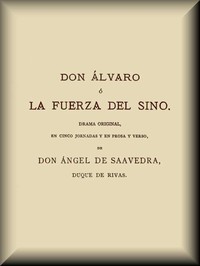
Don Álvaro, o, La fuerza del Sino by duque de Angel de Saavedra Rivas
Let's talk about Don Álvaro. This play is a cornerstone of Spanish Romanticism, and once you start, you'll see why. It's all about feeling over reason, destiny over choice, and it doesn't hold back.
The Story
Don Álvaro is a stranger in Seville. He's handsome, wealthy, and noble, but nobody knows where he comes from. He falls for Doña Leonor, and she for him. Her father, the Marquis of Calatrava, refuses the match because Álvaro's origins are unclear. The young lovers plan to elope. The Marquis catches them, a struggle happens, and Álvaro's gun goes off, killing the Marquis by accident. Leonor flees in shame to a remote convent, believing Álvaro is dead. Álvaro, heartbroken and guilty, joins the army under a fake name.
Years later, Álvaro saves a man's life in Italy. That man turns out to be Leonor's brother, Don Carlos, who is hunting the man who killed his father. They become friends without knowing who the other is. When the truth comes out, they duel. Álvaro wins, killing Don Carlos. He retreats to a monastery, seeking peace. But fate isn't done. Leonor's other brother, Don Alfonso, finds him. Another duel, another tragedy. Álvaro's search for redemption is constantly wrecked by the past he can't escape.
Why You Should Read It
This isn't a subtle story. It's big, loud, and emotional. What grabbed me was the raw power of its central idea: the 'force of fate.' Álvaro is a good man, but every time he tries to do the right thing, it backfires spectacularly. The system of honor that Leonor's family lives by is like a prison. It forces them into vengeance, destroying any chance for happiness. You feel for Álvaro. He's not a villain; he's a victim of circumstance and a cruel social code. The play moves fast—from city streets to battlefields to lonely hermitages—and the language is full of passion. It makes you think about how much of our life is really our own.
Final Verdict
Don Álvaro is perfect for readers who love classic tragedies, high drama, and historical settings. If you enjoy the doomed romance of 'Romeo and Juliet' or the relentless fate in Greek tragedies, you'll connect with this. It's also a great pick if you're curious about Spanish literature beyond Don Quixote. This is the play that defined a literary movement. Fair warning: it's not a cheerful read. But it's a powerful, unforgettable one. You'll finish it and sit there for a minute, just thinking about Álvaro's impossible struggle. That's the mark of a story that sticks with you.
This work has been identified as being free of known copyright restrictions. Access is open to everyone around the world.