
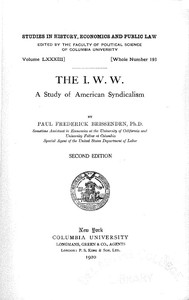
The I. W. W.: A Study of American Syndicalism by Paul F. Brissenden
Published in 1919, Paul Brissenden's The I.W.W.: A Study of American Syndicalism is a snapshot of a radical labor movement at its peak—and at the moment it was being systematically dismantled. Brissenden, a researcher for the U.S. Commission on Industrial Relations, had a front-row seat.
The Story
This isn't a novel with a plot, but the story it tells is gripping. It follows the rise of the Industrial Workers of the World from its founding in 1905. The IWW believed all workers should be in one big union, regardless of skill, race, or job. They wanted to overthrow the wage system itself, not just bargain for better pay. The book charts their growth among timber workers, miners, and migrant laborers through free-speech fights, famous strikes like the 1912 Lawrence Textile Strike, and their use of songs and pamphlets. Then, it details the fierce opposition: from company guards and local police to federal charges of sedition and espionage during World War I. The core drama is the clash between this bold vision and the overwhelming force used to stop it.
Why You Should Read It
You should read it because it makes history feel urgent. Brissenden writes with a scholar's care but doesn't hide the stakes. You feel the desperation of the workers the IWW organized—people often left out of other unions. You also feel the genuine panic of a government facing a group that rejected the entire economic system. It challenges the simple idea of 'progress' in labor history. It shows that the rights we have today weren't inevitable; they were won in fights where other, more radical ideas were silenced, sometimes violently. The book gives voice to a side of American history that's often glossed over.
Final Verdict
This is perfect for anyone curious about the roots of today's labor movements, social justice activism, or the history of dissent in America. It's not a light read, but it's a compelling one. If you like stories about underdogs, big ideas, and historical moments where everything felt up for grabs, you'll find this incredibly relevant. It’s a crucial piece for understanding not just where we've been, but the roads not taken.
There are no legal restrictions on this material. It is available for public use and education.
Margaret Martin
1 year agoThe clarity of the concluding remarks is very professional.




James Gonzalez
1 year agoUnlike many other resources I've purchased before, the narrative arc keeps the reader engaged while delivering factual content. Truly a masterpiece of digital educational material.