
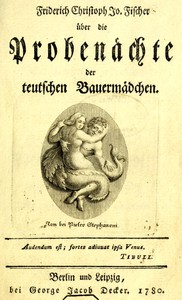
Über die Probenächte der teutschen Bauermädchen by Fischer
Let's be honest, the title alone makes you lean in. 'On the Trial Nights of German Peasant Girls.' What in the world were those? Published in 1780, this isn't your typical storybook. Friedrich Christoph Jonathan Fischer uses his essay to investigate a specific rural courtship ritual. The 'Probenacht' (trial night) was a custom where an engaged or seriously courting couple was allowed—even expected—to share a bed before marriage. The official rule was strict: no funny business. It was meant to be a test of the young man's honor and self-control, proving he valued the woman's virtue.
The Story
There isn't a single plot with characters, but the 'story' is the custom itself and Fischer's exploration of it. He describes how these nights were supposed to work, the social rules around them, and the immense trust (or pressure) placed on the young woman. Then, he gets real. He points out the obvious: human nature being what it is, how often did this test truly end with perfect chastity? He suggests that the custom often served as a quiet permission for sexual activity, a way for communities to turn a blind eye to what was really happening. The book becomes a clash between public ideals and private realities, between strict religious morality and the practical, messy ways people actually lived and loved.
Why You Should Read It
I found this book completely gripping because it reads like an 18th-century social exposé. Fischer isn't just describing a tradition; he's being a skeptic. You can feel him raising an eyebrow at the official version of events. It gives you a raw, unfiltered peek into the anxieties and hidden practices of everyday people in history—not kings and queens, but farmers and their daughters. The themes are instantly recognizable: societal hypocrisy, the control of women's sexuality, and the age-old struggle between what people preach and what they practice. It’s short, direct, and surprisingly bold for its time.
Final Verdict
This is a perfect pick for readers who love microhistories or social history that feels juicy and relevant. If you enjoyed books like The Village by Ivan Bunin or just love learning about the strange, unspoken rules of the past, you'll get a kick out of this. It's not a light romance; it's a smart, slightly subversive look at a tradition that forces you to think about the gaps in our own historical records. A fascinating little time capsule for the curious mind.
This is a copyright-free edition. Share knowledge freely with the world.







Anthony Smith
2 months agoEnjoyed every page.