About 44 minutes
Little Frankie and his Mother — Reading Companion
Childrens Adventures
9,948 recorded words. 25 minutes difference from this book's estimate.
View Gutenberg source #34830
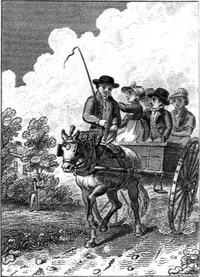
This digital edition of Deaf and Dumb! Third Edition — Reading Companion is described by source-level measurements including 15,753 words, 1 hr 9 min estimated reading time, and 2 detected text sections.
The text analysis averages about 25.4 words per sentence, while the detected sections provide another way to judge how the source is divided.
Project Gutenberg metadata also associates the work with “Conduct of life -- Juvenile fiction,” connecting these edition facts with the source record’s subject description.
Explore this collection
These alternatives are selected using recorded categories and estimated reading time.
About 44 minutes
Childrens Adventures
9,948 recorded words. 25 minutes difference from this book's estimate.
View Gutenberg source #34830About 43 minutes
Childrens Adventures
9,763 recorded words. 26 minutes difference from this book's estimate.
View Gutenberg source #35047About 43 minutes
Childrens Adventures
9,792 recorded words. 26 minutes difference from this book's estimate.
View Gutenberg source #38995Search stored excerpts and compare books → Choose by your preferences →
Choices use stored catalog measurements. Estimates vary with reading speed. A shared category is a catalog label, not a claim that two books have the same argument or literary quality.
Search reads excerpt text stored with this catalog and links to its associated Gutenberg record. The connection is stored in the site database; this tool does not recheck that every excerpt is word-for-word identical to that external record. Excerpt search does not cover every chapter and does not verify historical publication dates.
Catalog snapshot checked: 2026-09-25. Coverage: 98 public books, 98 available source excerpts.
Calculated from edition completeness, EPUB availability, text structure and catalogue metadata. Not a user rating.
Total of 100 points, scaled to a 2.5-5.0 range. Editions with an empty description or a missing EPUB file are not scored.
Public-domain source text
The source text is kept in the dedicated reader, separate from this catalogue record and its commentary.
Elizabeth Sandham's Deaf and Dumb! (third edition, 1818) opens not with a story but with a preface that directly addresses young readers as potential philanthropists. The author cites statistics from a contemporary asylum—sixty pupils admitted, yet ten times as many applicants turned away—and warns that children left untaught past age twelve may become irrecoverable. This framing positions the ensuing fiction as a charitable appeal, not merely a tale.
The excerpts show a narrative focused on William Beaufort, a deaf-mute boy who, after education, returns home able to speak. The catalog subjects list “Conduct of life” and “Friendship,” but the text emphasizes the emotional impact of William's new voice on his family, especially his mother and sister Lucy, who “kissed him twenty times.” The story's moral weight rests on demonstrating the transformative power of institutional education.
The preface occupies a significant portion of the excerpts, using direct appeals and statistical claims to stir sympathy. Sandham writes that “the number of those who cannot … be admitted into the Asylum, exceeds those who have received the benefit of it” by a tenfold margin. She targets “the lively feelings of youth, (the season of compassion),” urging readers to consider that the afflicted are their own age. This rhetorical strategy transforms the book into a fundraising tool, with the story serving as evidence of what education can achieve.
The catalog subject “Deaf people -- Education -- Juvenile fiction” aligns with this, but the preface goes further, explicitly stating that without early intervention, deaf children risk “listless apathy, or moody ideotism.” The excerpts do not show whether the novel itself repeats such dire warnings, but the preface sets a tone of urgent benevolence.
The longest excerpt depicts William's return from the asylum. His first words to his mother—“Mother! my dear mother!”—are repeated “as articulately as his emotion would allow him.” The family's reaction is described in physical terms: his father leaves work, his brother Edward jumps over a hedge, and Lucy “kissed him twenty times, pressed his hand, and held it tight.” William then performs his new skills, naming objects around the cottage and reading from his spelling-book. The narrative emphasizes his eagerness to “exhibit” his acquirements and receive congratulations.
This scene aligns with the catalog subject “Children -- Conduct of life,” but the conduct on display is less about moral behavior than about the visible proof of institutional success. William's speech becomes a public demonstration, with neighbors astonished and the Rawlinson family making him “say every thing that he could speak.” The story risks turning the boy into a spectacle of progress, a risk the text itself acknowledges: “William was in danger of thinking himself something extraordinary.”
The catalog includes “Friendship -- Juvenile fiction” and “Siblings -- Juvenile fiction,” and the excerpts do show William's bond with fellow pupil Jacob Goodyer and his sister Lucy. However, the friendship with Jacob is mostly reported: they travel home together, and Jacob “rejoicing that, in a very short time, he should have a pleasure equal to his friend's.” Lucy's joy is expressed through touch and gesture, not dialogue, suggesting that the narrative uses her silent devotion to highlight William's new voice.
What the excerpts do not reveal is how the story handles William's deafness before his education, or whether it depicts any ongoing challenges. The preface's claim that untaught deaf children become “moody ideotism” is not tested in the available text. Readers must infer the novel's full stance on disability from these fragments, which focus overwhelmingly on the triumphant afterglow of instruction.
The excerpts of Deaf and Dumb! present a work caught between sentimental fiction and social advocacy. Sandham's preface demands action, while the homecoming scene rewards that demand with a happy tableau. Readers should note that the story's evidence is partial: the excerpts show only the success, not the struggle. Pay attention to how the narrative balances William's individuality against his role as a symbol of charitable efficacy—and whether the book ever lets him be more than an example.
I keep thinking about William Beaufort finding his voice, and how that quiet shift rippled through everyone around him. It made me remember another story, one about how we see the past through a particular lens. There's a gentle, lingering ache in both. The White Man's Foot — Context and Discussion carries a similar weight, asking you to sit with what remains unseen for a while longer.
Answer a few questions and save a private reflection on this device.