
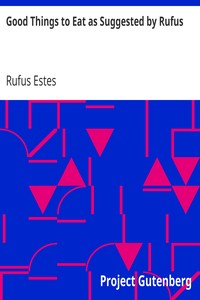
Good Things to Eat as Suggested by Rufus by Rufus Estes
On the surface, Good Things to Eat is exactly what it says it is: a collection of recipes. Published in 1911, it's filled with dishes that were fancy for their time—think Cream of Almond Soup, Boned Turkey, and dozens of cake and pudding recipes. But the real story isn't in the ingredients list; it's in the man who wrote it.
The Story
Rufus Estes was born enslaved in Tennessee. After emancipation, he started working on the railways, eventually becoming a chef for the Pullman Company, which ran the most luxurious trains in America. His job took him across the country and put him in private kitchens serving figures like President Benjamin Harrison and the British royal family. The book is his professional legacy, a guide to the sophisticated, continental-style cooking that was in high demand among the elite. But he frames it with a brief, matter-of-fact autobiography. He tells his incredible life story—from slavery to serving queens—in just a few pages, with no drama or visible anger. The rest of the book is simply the work he was proud of.
Why You Should Read It
You should read this because it's a quiet act of defiance. In an era when Black voices were systematically suppressed, Estes put his name on a book and said, "This is what I can do." The recipes themselves are a fascinating snapshot of Gilded Age tastes, but the power comes from the contrast. Here are elaborate instructions for making fancy French pastries, written by a man who, by the laws and customs of the time, many believed shouldn't even be literate. He asserts his expertise and his humanity through the most domestic of arts: cooking. It makes you read between the lines. When he writes a recipe for "Terrapin, Baltimore Style," you're not just learning to cook turtle; you're glimpsing the world of extreme wealth he operated within, and the immense skill it took for him to get there.
Final Verdict
This book is a must-read for anyone interested in the real, layered history of American food. It's perfect for home cooks who love food history, for readers seeking firsthand accounts of Black excellence after the Civil War, and for anyone who enjoys a story where the hero's weapon is a whisk. It’s not a novel with a plot twist, but a profound document that gets richer the more you think about it. You come for the historical recipes, but you stay for the unforgettable man behind them.
Legal analysis indicates this work is in the public domain. It is available for public use and education.
Linda Brown
2 months agoHaving followed this topic for years, I can say that the narrative arc keeps the reader engaged while delivering factual content. It’s a comprehensive resource that doesn't feel bloated.







James Thompson
2 months agoI was particularly interested in the case studies mentioned here, it addresses the common misconceptions in a very professional manner. It’s hard to find this much value in a single source these days.