
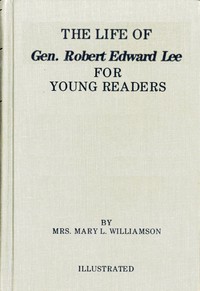
The Life of Gen. Robert E. Lee, for Children, in Easy Words by Mary L. Williamson
This isn't your modern history book. Published in 1898, Mary L. Williamson's biography was written for a generation of children whose parents might have lived through the Civil War. She tells the story of Robert E. Lee from his childhood and stellar career in the U.S. Army to his fateful decision to side with Virginia and lead the Confederate forces.
The Story
The book walks us through Lee's life in simple, direct language. We see him as a top graduate at West Point, a heroic engineer in the Mexican-American War, and a man who wrestled with the terrible choice between nation and state. Williamson spends significant time on famous battles like Fredericksburg and Chancellorsville, but the heart of her story is Lee's character. She paints him as a noble, devout, and brilliant leader who was beloved by his soldiers. The narrative strongly emphasizes his life after the war, as president of Washington College, where he worked to heal the nation's wounds.
Why You Should Read It
This book is a historical artifact. Reading it today is less about learning military facts and more about understanding how history gets shaped. Williamson's Lee is almost flawless—a 'great and good man' defined by piety, loyalty, and gentlemanly conduct. The issue of slavery, the central cause of the war, is mentioned only in passing. The focus is on state's rights, honor, and reconciliation. It's a powerful example of the 'Lost Cause' narrative that took hold in the late 1800s. As a reader, you're constantly comparing what's on the page with what you know was left off, which makes for a truly thought-provoking experience.
Final Verdict
This is not a balanced biography for a modern child. Instead, it's a perfect pick for adults and older students interested in historiography—how stories from the past are told and why. It's for anyone curious about post-Civil War America and how a divided nation tried to make sense of its trauma. Pair it with a contemporary biography for a stunning compare-and-contrast lesson. As a standalone read, it's a compelling, unsettling, and essential window into the mind of a bygone era.
This text is dedicated to the public domain. Knowledge should be free and accessible.
Charles Taylor
2 months agoAs a long-time follower of this subject matter, the evidence-based approach makes it a very credible source of information. I feel much more confident in my knowledge after finishing this.
Donald Flores
1 year agoThanks for the recommendation.
William Davis
4 months agoVery helpful, thanks.
Patricia Nguyen
3 months agoMy professor recommended this, and I see why.
Joseph Smith
1 year agoGreat value and very well written.