
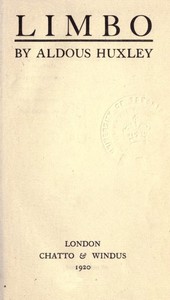
Limbo by Aldous Huxley
Before Aldous Huxley imagined the bottle-born citizens of the World State, he published 'Limbo' in 1920. This collection of six stories and a play isn't a single narrative, but they're all connected by one powerful feeling: being trapped in an in-between state. These characters are smart, sensitive, and utterly paralyzed.
The Story
The stories bounce between different settings and people, but the theme is constant. In 'Farcical History of Richard Greenow,' a man literally splits into two personalities—one a serious intellectual, the other a writer of popular, silly romances. 'Happily Ever After' follows a soldier home from World War I who finds peace impossible; the world he left behind feels hollow and fake. Another story centers on an artist so obsessed with perfection he destroys his own work. They're all people on the edge of something—genius, madness, peace—but they can't quite take the final step. They're in limbo.
Why You Should Read It
This is Huxley as a young writer, flexing his muscles. You can see the sharp wit and the obsession with ideas over feelings that would define his later work. It's less polished than 'Brave New World,' but in some ways, it's more personal. These stories feel like they're written by someone young and brilliant, trying to figure out his own place in a post-war world that seemed broken. The characters aren't always likable (they're often insufferable snobs!), but their struggle is real. Reading it is like finding the early sketches of a famous painting—you see the raw talent and the ideas that would later become masterpieces.
Final Verdict
This isn't the book to start with if you're new to Huxley. Grab 'Brave New World' first. But if you're a fan and want to see where he began, 'Limbo' is a must-read. It's perfect for readers who love character studies over plot, for anyone interested in the lost generation after WWI, or for writers who will nod in painful recognition at the portrait of creative block. It's a short, strange, and intellectually bracing look at the human tendency to get in our own way.
This historical work is free of copyright protections. It is now common property for all to enjoy.
James Young
2 years agoAfter hearing about this author multiple times, the depth of research presented here is truly commendable. Exceeded all my expectations.
Linda Davis
1 year agoVery helpful, thanks.



Robert Hernandez
5 months agoI found the author's tone to be very professional yet accessible, the breakdown of complex theories into digestible segments is masterfully done. A perfect balance of theory and practical advice.